
Physio Performance, Health & Fitness
Hamstring Strain Grades and Return to Play: A Physiotherapist’s Guide
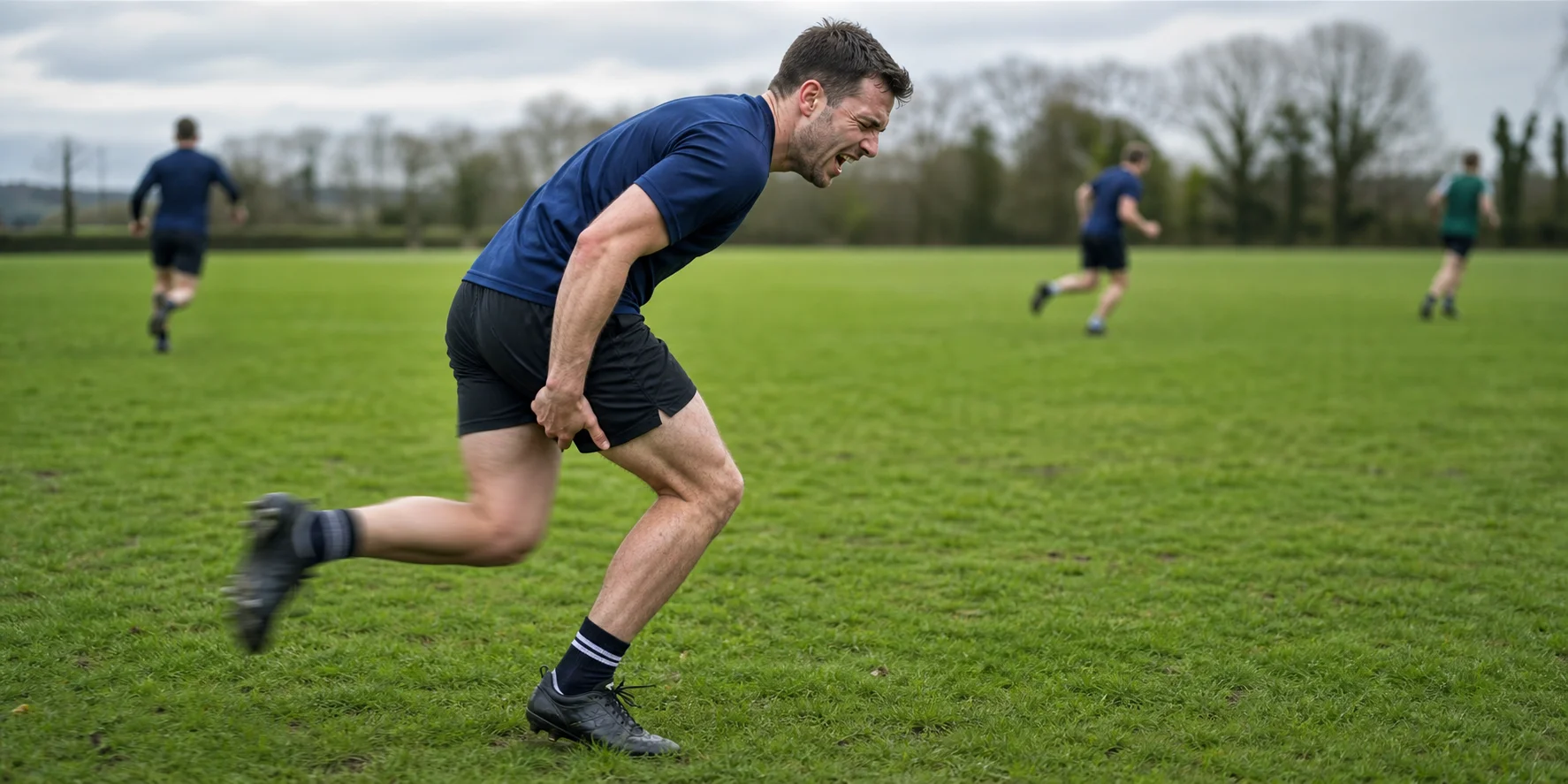
The hamstring strain is one of the most common injuries in Gaelic games, running and field sports generally, and it also has one of the highest recurrence rates of any soft tissue injury. Research consistently shows that a significant proportion of hamstring strains happen to players who have strained the same hamstring before, and the majority of those recurrences trace back to returning to sport before the muscle was actually ready.
This guide covers how hamstring strains are graded, what genuinely determines readiness to return, and why the timeline is not simply about how long since the injury happened.
The Grading System
Hamstring strains are typically classified into three grades based on the extent of muscle fibre damage, though the practical picture is often more of a spectrum than three sharp categories.
Grade 1. Mild strain involving a small number of muscle fibres. Discomfort during activity, minimal loss of strength, and usually the ability to continue moving, if uncomfortably. Swelling and bruising are minimal or absent.
Grade 2. Partial tear involving a moderate number of fibres. Noticeable pain at the time of injury, often described as a pulling or tearing sensation, some loss of strength, and difficulty continuing the activity. Swelling and bruising typically develop over the following one to three days.
Grade 3. Complete or near-complete tear of the muscle or tendon. Significant pain at the time of injury, often accompanied by an audible or felt pop, substantial loss of strength, difficulty walking normally, and significant swelling and bruising. These injuries sometimes require imaging to confirm the extent and occasionally warrant surgical opinion depending on location and severity.
The grade at diagnosis gives a rough guide to expected recovery time, but it is not the only factor that determines readiness to return, which is the part most self-managed recoveries get wrong.
Why Grade Alone Does Not Determine Return Timing
This is the central point of this guide, because it explains why hamstring strains recur so predictably.
Two players with an identical grade 2 strain can have genuinely different recovery timelines depending on their age, their previous hamstring injury history, how quickly appropriate treatment began, how the rehabilitation was structured, and critically, whether they met specific functional criteria before returning rather than simply waiting out a calendar timeline.
Research on hamstring injury, published in the British Journal of Sports Medicine, consistently identifies inadequate rehabilitation and premature return to sport as the primary drivers of the high recurrence rate seen in this injury, rather than the initial injury severity alone.
A player who returns at four weeks because that is when grade 2 injuries are typically expected to heal, without having actually demonstrated the strength and control needed for sport, is at considerably higher risk than one whose return is based on meeting specific criteria regardless of how long that takes.

The Phases of Hamstring Rehabilitation
Phase 1: acute management, days one to a few. Reducing pain and protecting the injured tissue. Gentle movement within a pain-free range, avoiding aggressive stretching, and appropriate load reduction. Complete immobilisation is not generally recommended, but neither is pushing through significant pain.
Phase 2: restoring pain-free movement and beginning loading, roughly one to three weeks. Progressive introduction of gentle strengthening, starting with isometric holds and building toward controlled dynamic movement as tolerance improves. Walking progresses to light jogging as pain allows.
Phase 3: progressive strengthening, roughly two to six weeks depending on severity. This is where the work that actually prevents recurrence happens. Eccentric strengthening exercises, particularly the Nordic hamstring curl, have strong evidence supporting their role in both rehabilitation and future injury prevention. Progressive running speed, building toward sprint-level intensity in a controlled setting.
Phase 4: sport-specific return, variable timing based on criteria met. Reintroducing the specific demands of the sport, cutting, accelerating, decelerating and sprinting at match intensity, in a controlled training environment before returning to full competitive play.
At our clinic in Drogheda we track strength recovery objectively through VALD Forcedecks testing, which measures the actual strength deficit between the injured and uninjured leg rather than relying on how the hamstring feels, since perceived readiness and actual physical readiness frequently do not match.
The Criteria That Actually Matter for Return
Rather than a fixed timeline, a proper return to play decision considers several specific factors together.
Strength comparison between legs. The injured hamstring should reach a strength level close to the uninjured side, measured objectively rather than estimated, before returning to full sport. A meaningful strength deficit is one of the clearest predictors of recurrence.
Pain-free full range of movement. Both stretching and active movement through full range without provoking symptoms.
Pain-free sprinting at match intensity. Not just jogging comfortably. The specific demand of maximal sprinting, which places by far the highest load on the hamstring during play, needs to be tolerated without symptoms before a genuine return.
Sport-specific movement tolerance. For GAA and field sports specifically, this includes cutting, sudden acceleration and deceleration, and kicking, all of which load the hamstring differently from straight-line running.
Psychological readiness. Players who are still guarding the leg or hesitant during high-speed movement are at increased risk, since altered movement patterns from fear of re-injury can themselves contribute to recurrence.

Why Recurrence Is So Common
A previous hamstring strain is the single strongest risk factor for a future one, and understanding why helps explain what genuinely reduces that risk.
Incomplete strength recovery. The most common reason. Pain resolving before strength has fully recovered leads many players and even some practitioners to consider the injury healed when it is not.
Skipping the eccentric strengthening phase. Eccentric loading, where the muscle lengthens under tension, is specifically what the hamstring experiences during the deceleration phase of sprinting, which is when most strains occur. Rehabilitation programmes that focus only on general strengthening without this specific eccentric component leave a genuine gap in preparation.
Returning based on time rather than criteria. A player told they can return at four weeks, without having actually met functional criteria, is following a calendar rather than their body’s actual readiness.
Inadequate warm-up on return. Even a fully rehabilitated hamstring needs proper preparation before high-speed activity, and rushing this step in the excitement of returning to play increases risk unnecessarily.
Fatigue. Hamstring strains occur more frequently in the later stages of matches and training sessions, when fatigue affects muscle coordination and the tissue’s capacity to handle high loads.
What This Means Practically
If you have strained a hamstring, the honest guidance is that the return timeline should be determined by meeting specific functional and strength criteria rather than by counting weeks against a generic grade-based estimate.
This is precisely why proper rehabilitation with objective progress tracking produces better outcomes than a generic home exercise programme followed by a return based on how the leg feels. Our hamstring injury rehab page covers our broader approach to this injury, and our running injuries page and GAA injuries page cover the sport-specific context many of our patients are managing.
We also offer a free hamstring injury recovery report for further guidance.
If you have strained a hamstring and want a structured rehabilitation programme with objective return to play criteria rather than a guess based on the calendar, book an assessment at our clinic in Drogheda.
Frequently Asked Questions
It depends on the grade and on how rehabilitation is managed. Grade 1 strains often allow return within one to two weeks, grade 2 within three to six weeks, and grade 3 can take two to three months or longer. These are rough guides only, since return should be based on meeting functional criteria rather than a fixed timeline.
Strength in the injured leg reaching a level close to the uninjured side, pain-free full range of movement, tolerance of sprinting at match intensity without symptoms, and confidence during sport-specific movements like cutting and accelerating. Time since injury alone is not a reliable indicator.
Most commonly because return to sport happened before strength and function were fully restored, particularly the eccentric strength that protects the muscle during high-speed deceleration. A previous strain is the strongest known risk factor for a future one.
Aggressive stretching in the early acute phase is generally not recommended and can aggravate the injury. Gentle movement within a pain-free range is appropriate, with more targeted stretching introduced as the injury progresses through rehabilitation under guidance.
Eccentric strengthening, particularly exercises like the Nordic hamstring curl, has strong supporting evidence for both rehabilitation and reducing future injury risk, since it specifically trains the muscle for the lengthening demand it experiences during sprinting.