
Physio Performance, Health & Fitness
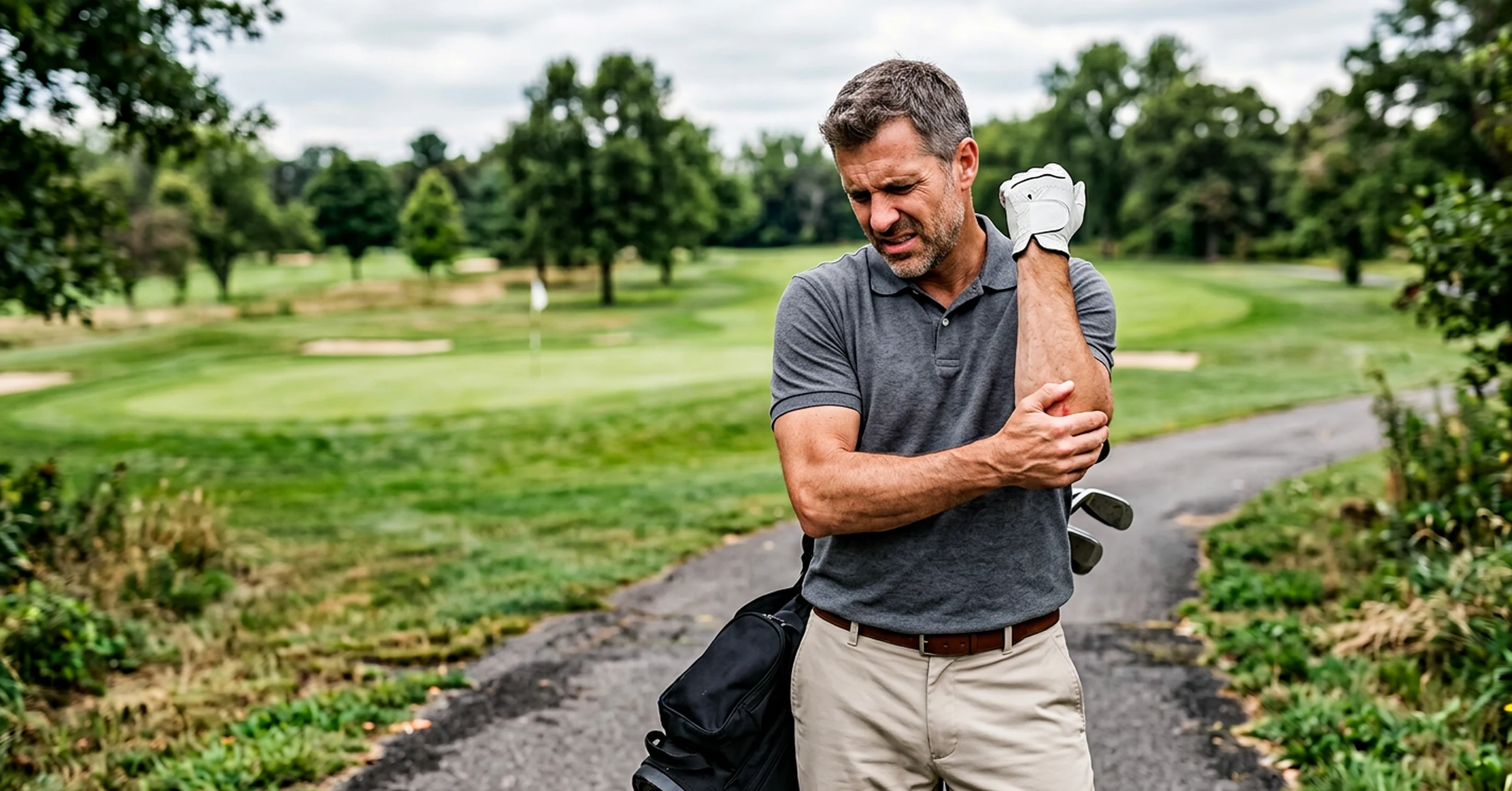
Golfer’s Elbow Treatment: Causes, Symptoms and Recovery
Golfer’s elbow, medically known as medial epicondylitis, causes pain on the inner side of the elbow and is often confused with its more famous cousin, tennis elbow, which affects the outer elbow instead. Despite the name, most people who develop it have never picked up a golf club, since it’s driven by repetitive gripping and forearm movement far more broadly than any single sport.
This guide covers what’s happening in the tendon, why it lingers so stubbornly without proper treatment, and what actually resolves it.
What's Actually Happening
The tendons that flex the wrist and fingers attach at a bony point on the inner elbow called the medial epicondyle. Repetitive gripping, wrist flexion or forceful forearm rotation gradually overloads these tendons beyond their capacity to recover, producing a tendinopathy, degenerative changes in the tendon rather than simple inflammation, despite the “itis” in the medical name suggesting otherwise.
It affects far more than golfers. Manual trades involving repetitive gripping, weightlifting with poor wrist position, and even prolonged computer use can all contribute, alongside racquet sports and, yes, golf.
It tends to develop gradually rather than from one specific incident. Most patients describe a slow build of discomfort that eventually became persistent, rather than a single moment of injury.
Recognising Golfer's Elbow
Pain and tenderness directly over the bony prominence on the inner elbow, sometimes radiating down the inner forearm.
Worse with gripping activities. Shaking hands, lifting objects with a bent wrist, or twisting motions like turning a key all tend to reproduce the familiar pain.
Stiffness that’s often worse first thing in the morning, gradually easing somewhat with movement before flaring again with continued use through the day.

Why It Lingers Without Proper Treatment
Rest alone rarely resolves it fully. Because the underlying issue is degenerative tendon change rather than simple inflammation, complete rest reduces pain temporarily but doesn’t rebuild the tendon’s capacity, so symptoms frequently return once normal activity resumes.
Many people stretch aggressively, which can aggravate an already irritated tendon. Gentle, controlled loading tends to be more effective than forceful stretching in the early stages.
Treatment That Actually Works
Eccentric and isometric loading exercises form the evidence-based foundation of treatment. Controlled, progressive loading of the wrist flexor tendons stimulates genuine tissue remodelling in a way that rest and stretching alone cannot achieve.
Activity modification addressing the actual cause. Identifying the specific repetitive movement, whether a golf swing fault, a gripping pattern at work, or a training technique issue, and adjusting it prevents the same overload from repeating once symptoms improve.
Manual therapy can help reduce pain and improve tolerance to loading, though it works best as a complement to progressive strengthening rather than a standalone treatment.
Shockwave therapy has reasonable supporting evidence for persistent cases. Our shockwave therapy service is one option we consider when a properly executed loading programme hasn’t produced sufficient improvement on its own.

Book an assessment at our clinic in Drogheda if inner elbow pain has been persisting despite rest. For related reading, see our guide on hamstring strain return to play, and current clinical guidance is available through Physiopedia.
Frequently Asked Questions
Golfer’s elbow affects the inner elbow, involving the wrist flexor tendons. Tennis elbow affects the outer elbow, involving the wrist extensor tendons. Both are overuse tendinopathies but affect opposite sides of the joint.
No. Despite the name, it commonly develops from manual work, weightlifting, racquet sports or repetitive gripping tasks that have nothing to do with golf.
Complete rest alone rarely resolves it fully, since the underlying issue is degenerative tendon change rather than simple inflammation. Progressive, controlled loading tends to be more effective than rest alone.
With a properly structured loading programme, many cases show meaningful improvement within six to eight weeks, though more established cases can take several months.
Not always. It’s generally considered for persistent cases that haven’t responded sufficiently to a properly executed progressive loading programme.