
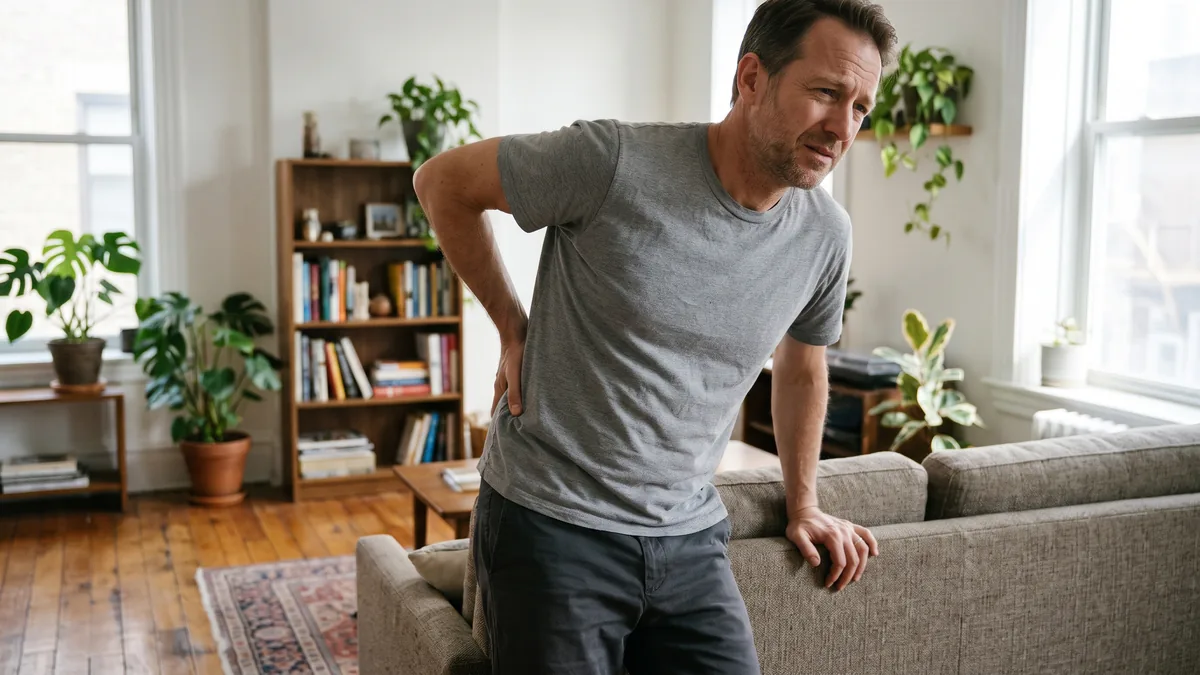
Quick answer: Pain in lower right side of back is most often a muscle strain, a stiff joint or an irritated nerve, and the cause is rarely serious. But pain on one side can also come from the kidneys, especially with a fever or pain when you pee. Physio Performance is a physiotherapy clinic in Drogheda, Co. Louth.
One sided back pain worries people more than pain across the middle. It is natural to ask whether it is your back or something inside. The honest answer is that one sided pain does not point to one cause on its own. What matters more is what comes with it.
This guide uses advice from the HSE and the NHS to explain the common causes, the warning signs and what to do next. It cannot tell you what is wrong with you. Only an assessment can do that.
We see people with back pain every week at our clinic in Drogheda, and a clear plan takes much of the worry away.
Key takeaways
- Most lower back pain gets better on its own within a few weeks or months, according to the HSE.
- Pain on one side can come from a muscle or joint, a nerve, or the kidneys.
- A fever, shivers, pain when you pee or sudden severe pain are not typical back pain signs, so get medical advice.
- Numbness around the genitals or bottom, or problems with your bladder or bowel, need urgent help.
- If the pain is not improving after a few weeks, see a GP or a physiotherapist.
Online booking, or call 041 987 7059.
What causes pain in lower right side of back?
The HSE says it is often not possible to identify the cause of back pain, which doctors call non specific back pain. When there is a cause, it is often an injury such as a sprain or strain, and it is rarely anything serious. The HSE also names two conditions that can cause back pain with other symptoms: a slipped disc and sciatica.
Pain on the right side does not tell you which one it is. The table below shows the usual possibilities and what each can feel like, using the HSE and NHS descriptions.
| Possible cause | What it can feel like |
|---|---|
| Muscle sprain or strain | An ache or sharp pain, often after lifting, twisting or an awkward movement |
| Slipped (prolapsed) disc | Back pain that can come with numbness, weakness or tingling |
| Sciatica | Irritation of the nerve that runs from the pelvis to the feet, so pain, tingling or numbness may travel down the leg |
| Kidney infection | High temperature, feeling or being sick, pain in the lower back or side, pain when you pee |
| Kidney stones | Severe pain that starts in the side or lower back and may spread to the groin, and may come and go |
Sources: HSE, Back pain. NHS, Kidney infection. NHS, Kidney stones.
The first three are the ones a physiotherapist can help with. The last two need medical care, which is why the warning signs below matter.
Is it a kidney problem or a back problem?
You cannot be sure from the side alone, so look at what else you have. The NHS lists the signs of a kidney infection as a high temperature, feeling or being sick, pain in your lower back or side, diarrhoea, aching muscles, pain or burning when you pee, needing to pee more often and pee that is dark or cloudy.
For kidney stones, the NHS says the pain usually starts in the side of your tummy or lower back, may spread to your groin, and may come and go. You may also have a high temperature, feel sick or have cloudy pee.
If you have those signs, do not wait for a back clinic. The NHS says to ask for an urgent GP appointment or get help from 111 with a kidney infection that brings a very high temperature, feeling hot, cold or shivery, pain under the ribs, blood in your pee or sickness. In Ireland, contact your GP or out of hours service.
Sources: NHS, Kidney infection. NHS, Kidney stones.
When should you see a GP about lower back pain?
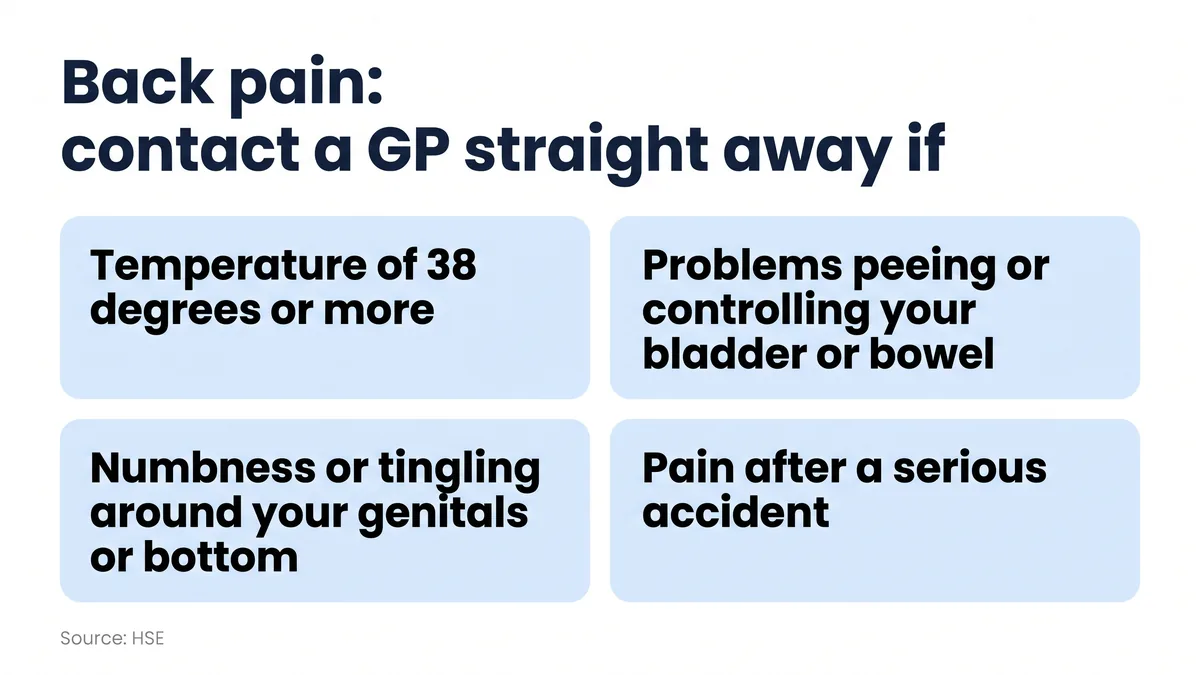
The HSE says to contact a GP straight away if you have back pain and any of these:
- numbness or tingling around your genitals or bottom
- pain that gets worse at night or stops you sleeping
- problems peeing
- problems controlling your peeing or pooing
- chest pain
- shivers, hot skin or a temperature of 38 degrees Celsius or more
- unexplained weight loss
- a swelling or deformity in your back
- pain that rest does not reduce
- pain after a serious accident
- pain that gets worse when you sneeze, cough or poo
- pain at the top of your back, or between your shoulders
The HSE says these can be signs of something that needs urgent attention. For a list of when to call 999 or go to A&E, the NHS includes pain, tingling, weakness or numbness in both legs, loss of feeling around the genitals or bottom, and changes in your bladder or bowel. In Ireland, call 112 or 999.
Sources: HSE, Back pain. NHS, Back pain.
Even without those signs, the HSE says to contact a GP if the pain does not start to improve within a few weeks, stops you doing everyday activities, or is very severe or getting worse.
What can you do at home for lower right back pain?
For most people, the HSE advice is to keep moving. It says back pain usually gets better on its own within a few weeks or months, and recommends you:
- stay as active as possible, and walking, swimming, yoga and Pilates may help
- keep up your everyday activities, because too much rest can make it worse
- stretch and do exercises for back pain
- ask your pharmacist about painkillers such as ibuprofen
- use a hot or cold compression pack, or a hot water bottle or frozen vegetables in a cloth
The NHS adds that paracetamol on its own is not recommended for back pain, and that you should not stay in bed for long periods. Stop any exercise that makes the pain worse and get advice.
Or book online at Physio Performance in Drogheda.

Can a physiotherapist help with lower right back pain?
Yes, for back pain that comes from the muscles, joints, discs or nerves. The HSE says a GP or physiotherapist may recommend group exercises, physiotherapy such as massage and psychological support. It also says you can contact a physiotherapist directly for exercises and stretches.
At Physio Performance, an appointment starts with an assessment of how your back, hips and legs move and where the pain shows up. From there we build an exercise programme for you on the Physitrack app, and we use hands on treatment and dry needling where they suit you. If your symptoms do not look like a back problem, we point you to your GP.
We do not promise a result in a set number of sessions, because every back is different. Our guides on lower back pain and what to do when you have back pain give more detail.
What if the pain runs down your leg?
Pain that travels from the back into the buttock or leg can be sciatica. The HSE describes sciatica as irritation of the nerve that runs from the pelvis to the feet, and says a slipped disc and sciatica can cause numbness, weakness or tingling. These need different treatment to other types of back pain.
If you have pain down one leg, read our guides on sciatica treatment in Drogheda and piriformis syndrome versus sciatica. Pain, tingling, weakness or numbness in both legs is a different matter. The NHS says to call 999 or go to A&E for that, as it can be a sign of a serious problem.
How can you lower the risk of it coming back?
The HSE says it is difficult to prevent back pain, but you can lower your risk. Its advice is to:
- Try back exercises and stretches that a GP or physiotherapist recommends.
- Stay active, aiming for at least 150 minutes of activity a week.
- Avoid sitting for a long time. Get up to move or stretch every hour if you can.
- Take care when you lift things, and use training if your workplace offers it.
- Check your posture when you sit or use screens.
- Check your mattress supports you properly.
Our guide on lower back pain myths covers why people avoid moving when they should keep going. For a full overview see our back pain treatment in Drogheda page.

Frequently asked questions
What causes pain in the lower right side of the back?
It is often a muscle sprain or strain, a stiff joint, a slipped disc or an irritated nerve such as sciatica. The HSE says the cause is often not clear and is rarely serious. Pain on one side can also come from the kidneys, so look at the other symptoms and get advice if you are unsure.
Is lower right back pain a kidney problem?
It can be, but it is not the most common cause. The NHS says a kidney infection can cause pain in the lower back or side with a high temperature, sickness and pain when you pee. Kidney stones cause severe pain in the side or lower back. If you have those signs, get urgent medical advice.
When should I worry about lower back pain on one side?
Get medical help if you have a temperature of 38 degrees or more, shivers, pain when you pee, numbness around the genitals or bottom, bladder or bowel problems, pain that wakes you at night, or pain after a serious accident. The HSE and NHS both list these as signs of something that needs checking.
Should I rest or keep moving with lower right back pain?
The HSE says to stay as active as you can, because too much rest can make back pain worse. Walking, swimming, yoga and Pilates may help. Stop any activity that makes the pain worse. If the pain is not improving after a few weeks, see a GP or a physiotherapist.
Can a physiotherapist treat pain in the lower right side of the back?
Yes, if it comes from the muscles, joints, discs or nerves. A physiotherapist assesses how you move, then builds an exercise programme and uses hands on treatment where it suits. If your symptoms look like they come from somewhere else, such as the kidneys, you should see your GP.
Conclusion
Pain in lower right side of back is usually a muscle, joint or nerve problem, but pain with a fever, pain when you pee or sudden severe pain needs medical care. Keep moving, use simple pain relief and see a GP or a physiotherapist if it is not improving after a few weeks. Do not ignore the warning signs. Physio Performance in Drogheda can assess your back and build a plan around you. Call 041 987 7059 or book online.
Physio Performance, Donore Business Park, Drogheda.