Physio Performance, Health & Fitness
Return to Sport Testing After ACL Reconstruction
Nine months after ACL reconstruction used to be treated as an unofficial green light for return to sport, purely because that’s roughly how long research suggested tissue healing takes. Current evidence and practice have moved considerably beyond a fixed timeline. Return to sport testing after ACL reconstruction should be based on objective performance criteria, not simply counting months since surgery.
This guide covers why time alone is an inadequate marker of readiness, and what genuine return to sport testing actually involves.
Why Time Alone Isn't Enough
Reinjury rates for athletes who return based purely on a timeline, without meeting functional criteria, are considerably higher than for those who meet objective benchmarks first. This is one of the more consistent and important findings in ACL research over recent years, and it’s directly changed how return to sport decisions should be made.
Tissue healing and functional readiness aren’t the same thing. A graft can be biologically healed enough to tolerate load by a certain point, while the surrounding strength, neuromuscular control and psychological readiness needed for genuine sport-level performance still lag considerably behind.
Perceived readiness and actual physical readiness frequently don’t match. Many athletes feel ready well before objective testing confirms they’ve actually restored adequate strength symmetry and movement quality, and relying on how something feels risks a premature, higher-risk return.
What Genuine Return to Sport Testing Involves
Strength testing, comparing the surgical leg against the uninjured leg objectively. Quadriceps and hamstring strength, tested directly rather than estimated, need to reach an appropriate percentage of the uninjured leg’s strength before return to sport is considered appropriate. Our VALD Forcedecks testing gives us this data precisely, rather than relying on a general clinical impression.
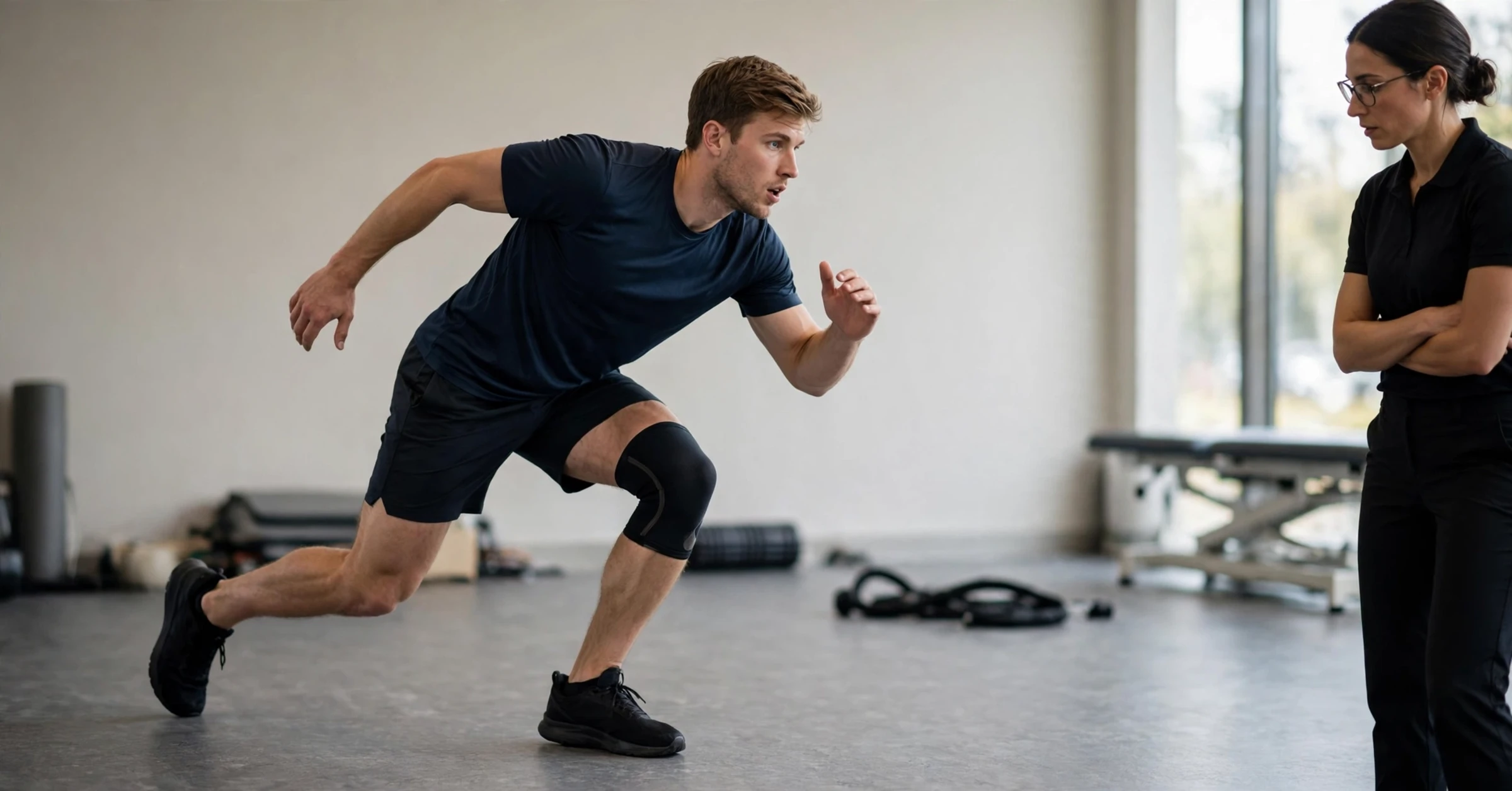
Hop testing across several specific tests. Single leg hop for distance, triple hop, and other established hop test variations, compared between legs, assess power, control and confidence in the surgical leg under load that more closely resembles sporting demands than strength testing alone.
Movement quality assessment during landing and cutting. Beyond raw strength and hop distance numbers, how a knee actually moves during landing, whether it collapses inward or shows poor control, matters considerably for ongoing injury risk regardless of what the strength numbers show.
Psychological readiness assessment. Fear of reinjury and confidence in the knee genuinely affect movement quality and, by extension, actual reinjury risk. An athlete who’s physically ready but still guarding the knee out of fear carries real risk that purely physical testing alone won’t capture.

Why This Matters So Much for ACL Specifically
Second ACL injury rates, either to the same or the opposite knee, are meaningfully elevated in the years following the first injury. This elevated risk is part of why the return to sport decision carries more weight for ACL specifically than for many other injuries, and why cutting corners on testing has genuinely higher stakes.
Younger athletes and those returning to cutting and pivoting sports carry particularly elevated reinjury risk. This doesn’t mean these athletes shouldn’t return to sport, but it does mean the testing and criteria used to clear them for return deserve particular rigour given the population’s higher baseline risk.
What a Properly Staged Return Looks Like
Testing at multiple points through rehabilitation, not just at the very end. Regular objective testing throughout the process, not only as a final gatekeeping step, helps track genuine progress and catch any plateau or concerning pattern early enough to address it.
A graduated return to sport-specific activity once testing criteria are met, rather than an immediate jump to full competition. Progressing through controlled training, then match-intensity training, before returning to actual competitive play, gives an additional layer of confirmation that the knee genuinely holds up under progressively increasing demand.
Ongoing monitoring even after return to sport. The elevated reinjury risk window extends beyond the point of initial return, and continued attention to strength and movement quality in the months following return to sport remains genuinely relevant.

At our clinic in Drogheda, we use VALD Forcedecks testing as a core part of ACL return to sport assessment, giving objective data rather than a guess based on how a knee feels or how many months have passed. Book an assessment if you’re progressing through ACL rehabilitation and want a genuinely objective readiness assessment before returning to sport.
Frequently Asked Questions
There’s no fixed timeline that applies to everyone. Current best practice bases return to sport on meeting specific objective strength, hop testing and movement quality criteria, which typically takes at least nine months but varies by individual.
Because tissue healing and functional readiness, including strength symmetry, movement quality and psychological confidence, don’t always align on the same timeline, and returning before these are genuinely restored leaves the knee less protected under sporting demands.
Strength testing comparing both legs objectively, several hop test variations assessing power and control, and movement quality assessment during landing and cutting, alongside psychological readiness.
Yes, genuinely. Fear of reinjury affects movement quality and confidence in the knee, which has a documented relationship with actual physical performance and, in turn, reinjury risk.
Ideally not entirely. The elevated reinjury risk window extends beyond initial return, so continued attention to strength and movement quality in the following months remains genuinely relevant.