
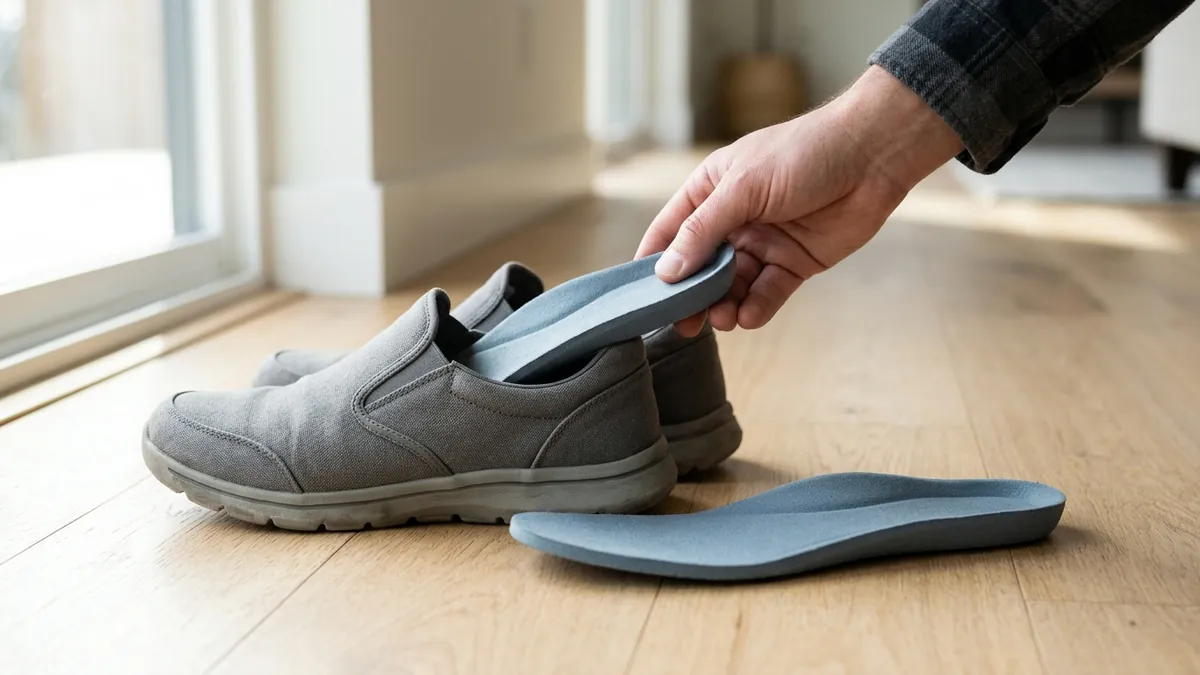
Quick answer: The best shoes for plantar fasciitis are wide, comfortable and supportive, with a low heel and a soft sole, according to the HSE. Soft insoles or heel pads can add cushioning, and you should avoid high heels, flip flops and walking barefoot on hard floors. Physio Performance in Drogheda, Co. Louth can check your feet and make custom orthotics if shoes are not enough.
When heel pain starts, shoes are the first thing most people change. Google Trends data for Ireland, checked on 5 November 2026, shows searches for “plantar fasciitis” more than twice as high in the past four weeks as in early August. The top related search is “shoes for plantar fasciitis”. Searches such as “doctor recommended shoes plantar fasciitis” are among the fastest rising.
Plantar fasciitis is pain in the heel and the arch of the foot. It comes from straining the plantar fascia, the band of tissue that connects your heel bone to your toes. The HSE says it is common and that you can often ease the pain yourself.
This guide explains what the HSE and the NHS say about footwear, what to look for and what to avoid. It is general information and not a diagnosis, so see your GP or a chartered physiotherapist about your own foot. It is written by the Physio Performance team in Drogheda.
Key takeaways
- The HSE advises wide, comfortable shoes with a low heel and a soft sole if you have plantar fasciitis.
- Soft insoles or heel pads can add cushioning. A pharmacist, podiatrist or physiotherapist can advise on which suit you.
- Avoid high heels, tight pointed shoes, flip flops, backless slippers and walking barefoot on hard surfaces.
- No single shoe suits every foot, so comfort and fit for your own foot matter more than a brand name.
- If shoes and home care do not help within 2 weeks, see your GP or a physiotherapist, and ask about custom orthotics.
Physio Performance, Donore Business Park, Drogheda. Free parking.
What do the HSE and the NHS say about shoes for plantar fasciitis?
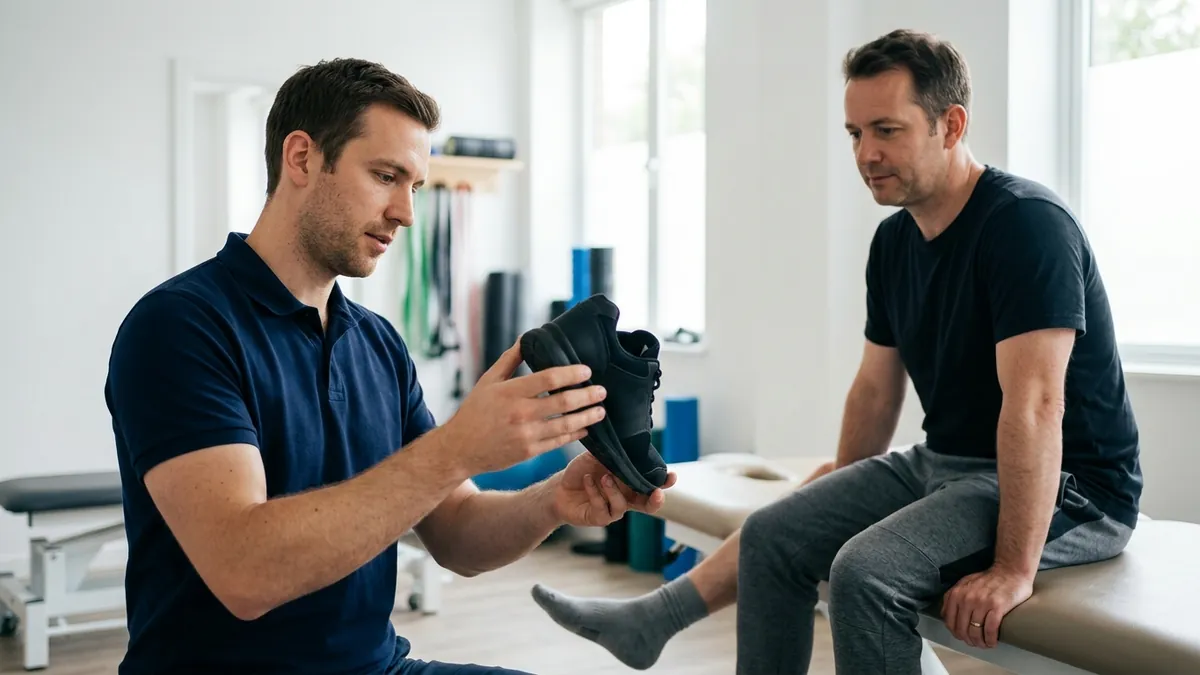
Both health services give footwear a clear place in treatment. The HSE lists shoe advice among the steps for easing plantar fasciitis. The NHS says a podiatrist can recommend insoles and the right shoes to wear, as well as splints to wear at night.
| Source | What it says about footwear |
|---|---|
| HSE | Wear wide, comfortable shoes with a low heel and a soft sole. Use soft insoles or heel pads. Do not wear high heels, tight pointed shoes, flip flops or backless slippers. Do not walk barefoot on hard surfaces. |
| NHS | A podiatrist can recommend insoles and the right shoes. You can also pay to see a podiatrist or physiotherapist privately. |
Sources: HSE, Plantar fasciitis (reviewed 14 October 2025), and NHS, Plantar fasciitis.
The HSE also says to ask your pharmacist about insoles and pads for your shoes. Your GP may refer you to a physiotherapist for exercises or to a podiatrist for footwear advice.
Footwear is only one part of the plan. The HSE also lists rest, an ice pack for up to 20 minutes every 2 to 3 hours for a few days, regular gentle stretching and exercise that does not press on your feet, such as swimming. Shoes work best alongside those steps.
Which shoe features should you look for?
There is no perfect shoe for every foot. Use the HSE advice as your starting point, and then let comfort guide you.
- A wide fit. Your foot should not feel squeezed.
- A low heel, as the HSE advises.
- A soft sole that cushions each step.
- A shoe that is comfortable straight away.
- Room to add a soft insole or heel pad if you need one.
Our own plantar fasciitis treatment guide lists poor arch support, very flat soles and excessive heel height among the footwear risks. Advice on the exact heel height and the amount of arch support varies from person to person. That is why a quick assessment helps, rather than a single rule.
Which shoes should you avoid, and what about slippers?
The HSE is specific. If you have plantar fasciitis, do not wear:
- high heels
- tight pointed shoes
- flip flops
- backless slippers
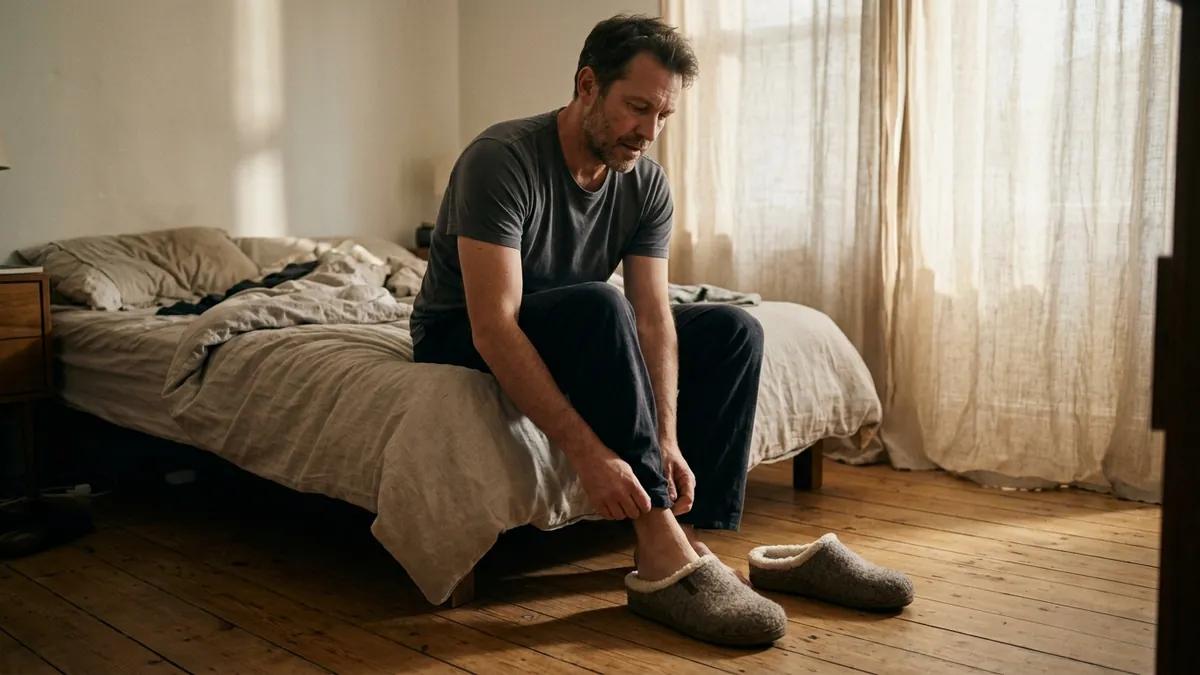
It also says not to walk barefoot on hard surfaces. That includes the kitchen and bathroom floor first thing in the morning. A pair of supportive slippers or shoes beside the bed means your first steps are on a cushioned sole. Our guide to heel pain in the morning explains why those first steps hurt most.
Do insoles and custom orthotics help?
Soft insoles or heel pads are a simple first step, and the HSE suggests them. They are cheap and easy to try. Ask a pharmacist, podiatrist or physiotherapist which type suits you.
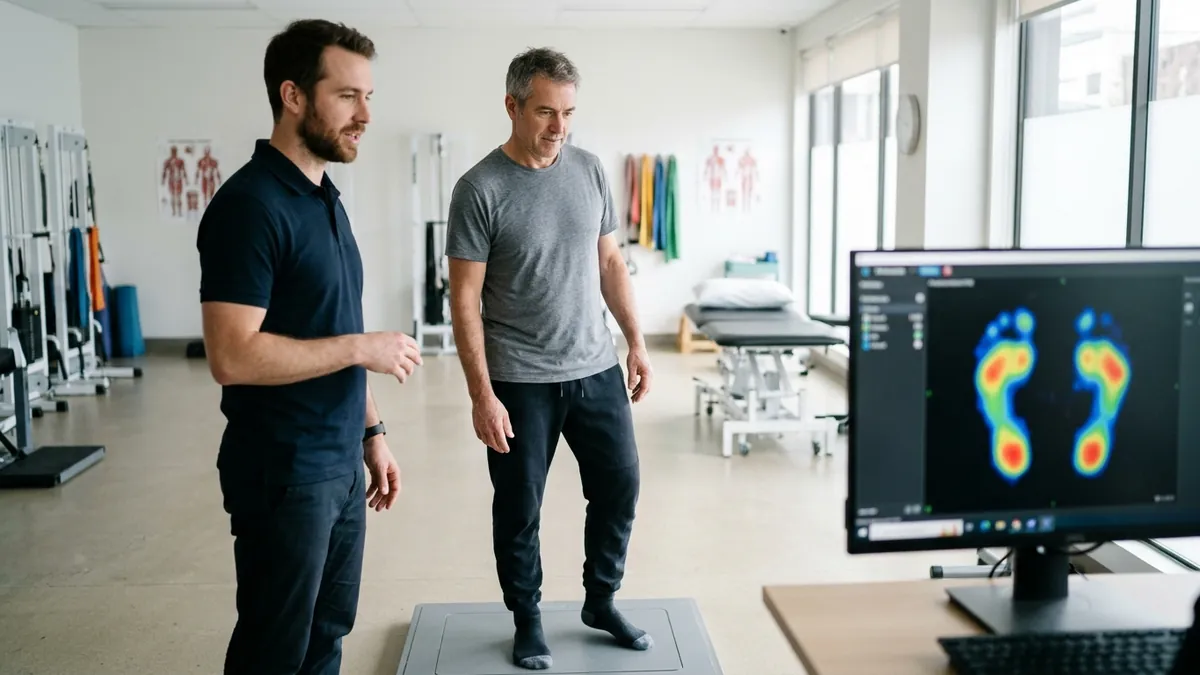
If the pain continues, a closer look at how your foot moves can help. At Physio Performance we use GaitScan technology. It records how you walk or run across a force plate and produces a report and a 3D image of the pressure under your foot. Your physiotherapist uses it to check your foot mechanics and decide whether custom orthotics in Drogheda would help.
Custom orthotics are not needed by everyone. Insoles are one part of the plan, and the HSE also lists gentle stretching, so your exercises stay in the plan alongside them. Many people improve with the right shoes, soft insoles and a good exercise plan. Read the benefits of custom orthotics to see who they suit best.
Or call 041 987 7059.
How do you choose shoes in the shop?
These simple checks help you choose well. They are general fitting tips, not a medical prescription.
- Try both shoes on and walk around the shop on a hard floor.
- Check that the shoe is wide enough and that your toes have room.
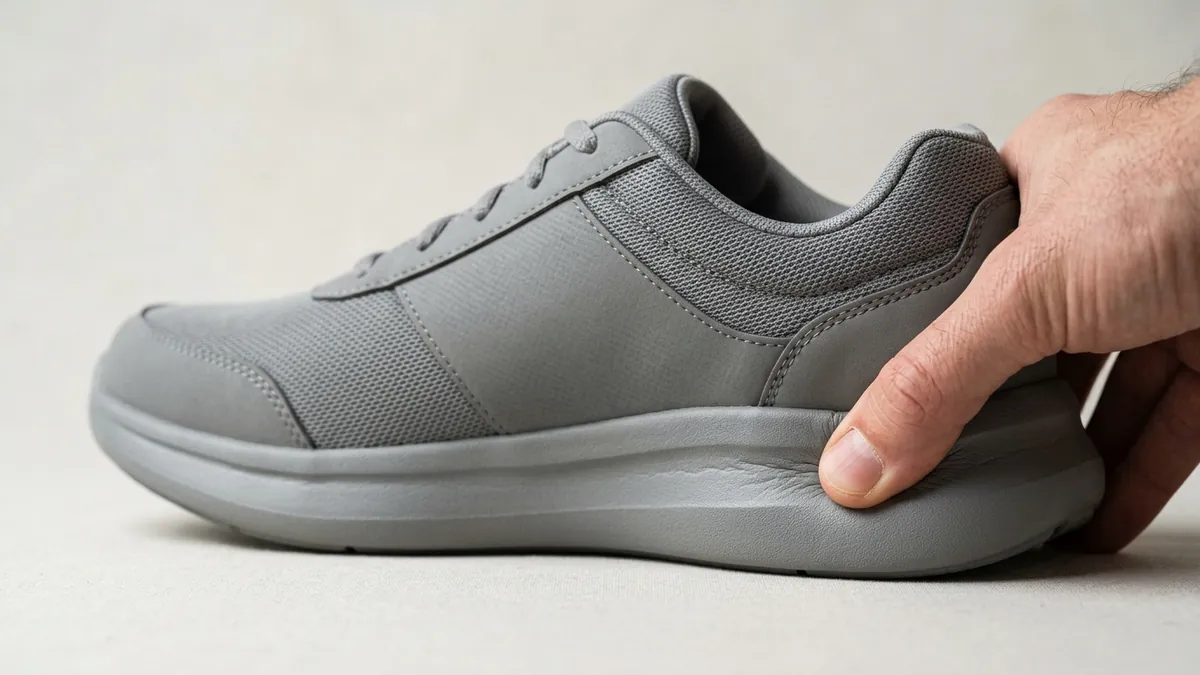
- Press the sole and the heel. It should feel soft and cushioned.
- Check that the heel is low.
- Wear new shoes for short spells first. Stop if your heel pain gets worse.
- Replace shoes when the cushioning is worn out.
Brand names matter less than fit. Many shoes carry a plantar fasciitis label, so rely on how they feel on your foot and on the HSE features above.
What about work shoes, running shoes and everyday life?
The HSE lists a lot of walking, running or standing as a cause of plantar fasciitis. It also lists shoes with poor cushioning or support. So if your job keeps you on your feet, your work shoes deserve the most attention. Choose the supportive pair for long shifts and save other shoes for short outings. Jobs with a lot of standing, such as teaching, retail, hospitality and building work, are common examples. Notice how your heel feels at the end of a shift and tell your physiotherapist.
For runners, shoes matter too. Read our post on how to choose running shoes, and ask a physiotherapist before you return to running with heel pain.
When should you see a GP or a physiotherapist?
Shoes help, but they are not the whole answer. The HSE says to contact your GP if:
- the pain is severe or stops you doing normal activities
- the pain is getting worse or keeps coming back
- the pain has not improved after treating it yourself for 2 weeks
- you have tingling or any loss of feeling in your foot
- you have diabetes, because foot problems can be more serious
A physiotherapist can find the cause, show you exercises and tell you honestly what to expect. At Physio Performance we send every patient a personalised exercise programme through the Physitrack app.
Frequently asked questions
What are the best shoes for plantar fasciitis?
There is no single best shoe. The HSE advises wide, comfortable shoes with a low heel and a soft sole, plus soft insoles or heel pads. Fit and comfort matter more than a brand name. A physiotherapist or podiatrist can advise on the right choice for your feet.
Are flip flops bad for plantar fasciitis?
The HSE says not to wear flip flops, backless slippers, high heels or tight pointed shoes if you have plantar fasciitis. It also says not to walk barefoot on hard surfaces. Choose shoes that hold and cushion your foot, even for short trips.
Do I need custom orthotics for plantar fasciitis?
Not always. Many people start with supportive shoes and soft insoles, as the HSE suggests. If the pain continues, a physiotherapist or podiatrist can assess your foot mechanics and advise on insoles. Physio Performance uses GaitScan technology to analyse your feet before making custom orthotics.
Should I wear shoes around the house?
Wearing supportive footwear is sensible, because the HSE advises against walking barefoot on hard surfaces. Many people keep supportive slippers or shoes beside the bed so the first steps of the day are on a cushioned sole. Avoid backless slippers.
When should I see a doctor about heel pain?
Contact your GP if the pain is severe, gets worse or keeps coming back, or has not improved after 2 weeks of self care, according to the HSE. See a doctor sooner if you have tingling or loss of feeling in your foot, or if you have diabetes.
Conclusion
The right shoes for plantar fasciitis are wide, comfortable and supportive, with a low heel and a soft sole. Add soft insoles if you need them, avoid flip flops and bare feet on hard floors, and give your feet a few weeks to respond. If the pain does not improve, get it checked. Physio Performance in Drogheda, Co. Louth can assess your feet, build an exercise plan and advise on custom orthotics. If you have diabetes, get advice sooner. Book online or call 041 987 7059.
Physio Performance, Drogheda. Call 041 987 7059.