
Physio Performance, Health & Fitness
Heel pain in the morning is one of those problems that seems almost too specific to be a proper medical condition. You get out of bed. You take your first few steps. And the bottom of your heel feels like you are walking on broken glass. Within five to ten minutes it eases off and your foot feels almost normal again. So you carry on with your day and try not to think about it. Until tomorrow morning when it happens again.
If that description is familiar you are dealing with one of the most common musculoskeletal conditions we treat at Physio Performance in Drogheda. That sharp stabbing heel pain in the morning that eases after a few minutes is the classic presentation of plantar fasciitis and it is affecting a significant number of people in Drogheda and across Co. Louth who are managing it with gritted teeth rather than getting it properly treated.
The reason most people delay treatment for heel pain in the morning is the same reason most conditions persist longer than they need to. It does not seem serious enough to bother with. It eases off. Life is busy. And there is a general assumption that it will eventually go away on its own. Sometimes it does. More often it does not and by the time the person finally comes in the condition has been present for six months or more and is significantly harder to resolve than it would have been at six weeks.
1. Why Heel Pain in the Morning Feels Worst With the First Steps
The specific pattern of heel pain in the morning that is worst with the first few steps and then eases with movement has a clear physiological explanation. During sleep your foot rests in a plantarflexed position, toes pointing down, with the plantar fascia in a shortened, relatively unloaded state. As the plantar fascia sits in this position overnight it begins to undergo a low-level healing response. New fibres lay down across the micro-tears that have accumulated from the previous day’s loading.
When you take your first steps in the morning your body weight suddenly loads the plantar fascia from this shortened, partially healed state. The tissue is stretched rapidly under full body weight and the newly laid fibres are disrupted. This is what causes the sharp pain of those first steps.
After five to ten minutes of walking the tissue warms up, becomes more pliable, and the acute pain settles. This is why the pain eases with movement and why it returns after periods of sitting. Every time you have been off your feet for an extended period and then stand up again, the same cycle restarts.
Understanding this mechanism is important because it explains why complete rest is not the answer to heel pain in the morning. Resting the foot eliminates the load but it also allows the cycle of overnight tissue shortening and morning disruption to continue indefinitely. The correct treatment addresses the tissue quality and the loading capacity rather than simply reducing the load.
2. What Is Actually Causing Your Heel Pain in the Morning
Plantar fasciitis. The overwhelmingly most common cause of heel pain in the morning. The plantar fascia is a thick band of connective tissue running from the heel bone to the base of the toes that supports the arch of the foot and absorbs the impact of each step. When it becomes repeatedly overloaded, degeneration occurs at the heel attachment and produces the classic morning pain pattern. For our complete guide on this condition see our Plantar Fasciitis Treatment Drogheda blog.
Fat pad syndrome. The heel fat pad is the natural shock-absorbing cushion under the heel bone. In older adults, runners, and people who spend long hours on hard surfaces this fat pad can thin and lose its shock-absorbing capacity, producing heel pain on weight-bearing that is often worst in the morning and on hard floors.
Achilles tendinopathy at the insertion. Insertional Achilles tendinopathy produces pain at the back of the heel where the Achilles tendon attaches to the calcaneus rather than at the bottom of the heel where plantar fasciitis is felt. It shares the morning pain pattern because the Achilles tendon, like the plantar fascia, tightens overnight and is stressed with the first steps of the day.
Calcaneal stress fracture. Less common but important to identify. A stress fracture of the heel bone produces heel pain that is worse with activity rather than just with first steps in the morning and is provoked by direct compression of the heel from the sides. This requires clinical assessment to distinguish from plantar fasciitis and may require imaging.
Heel bursitis. Inflammation of the retrocalcaneal bursa, the fluid-filled sac at the back of the heel, produces pain at the posterior heel that can be confused with insertional Achilles tendinopathy but requires different management.
3. Heel Pain in the Morning: The Proven Approach at Physio Performance Drogheda
3.1 Assessment That Confirms the Diagnosis
Every patient presenting with heel pain in the morning at Physio Performance begins with a thorough one-to-one assessment. The specific location of the pain, the behaviour across the day, the tenderness on clinical testing, the foot mechanics and arch structure, the calf flexibility and ankle mobility, and the loading demands of the patient’s occupation and activity all combine to produce a confirmed diagnosis and a specific treatment plan.
This assessment matters because the treatment for plantar fasciitis is different from the treatment for insertional Achilles tendinopathy, fat pad syndrome, or a stress fracture. Treating the wrong condition with the wrong approach produces no improvement regardless of how diligently the patient follows the plan.
3.2 Progressive Loading: The Most Important Treatment
The cornerstone of treatment for heel pain in the morning from plantar fasciitis is progressive loading, specifically designed exercises that load the plantar fascia and the calf complex in a controlled, progressive way that stimulates tissue remodelling and builds genuine capacity rather than simply managing symptoms.
Research consistently demonstrates that progressive loading programmes for plantar fasciitis produce significantly better long-term outcomes than passive approaches including rest, stretching, and anti-inflammatory medication alone. The tissue responds to load by remodelling and strengthening but only when that load is applied progressively rather than in the random, uncontrolled way that daily activity provides.
The loading programme at Physio Performance for heel pain in the morning begins with specific calf raise variations that load the plantar fascia under progressive tension, starting with double leg work and progressing to single leg with added load. Alongside this, intrinsic foot muscle strengthening builds the small muscle capacity that reduces the demand on the plantar fascia itself during loading activities.
Every patient receives their programme through the Physitrack app with video guidance, clear instructions, and progressive targets so the exercises are always being done correctly between sessions.
3.3 Manual Therapy and Soft Tissue Treatment
Hands-on treatment targeting the calf muscles, the Achilles tendon, and the plantar fascia itself plays a supporting role particularly in the early stages when pain and tissue sensitivity are highest. Soft tissue release of the calf, joint mobilisation of the ankle and subtalar joints, and specific myofascial release of the plantar fascia all help reduce pain and improve tissue mobility, creating a better environment for the loading work that drives genuine recovery.
3.4 Shockwave Therapy for Persistent Cases
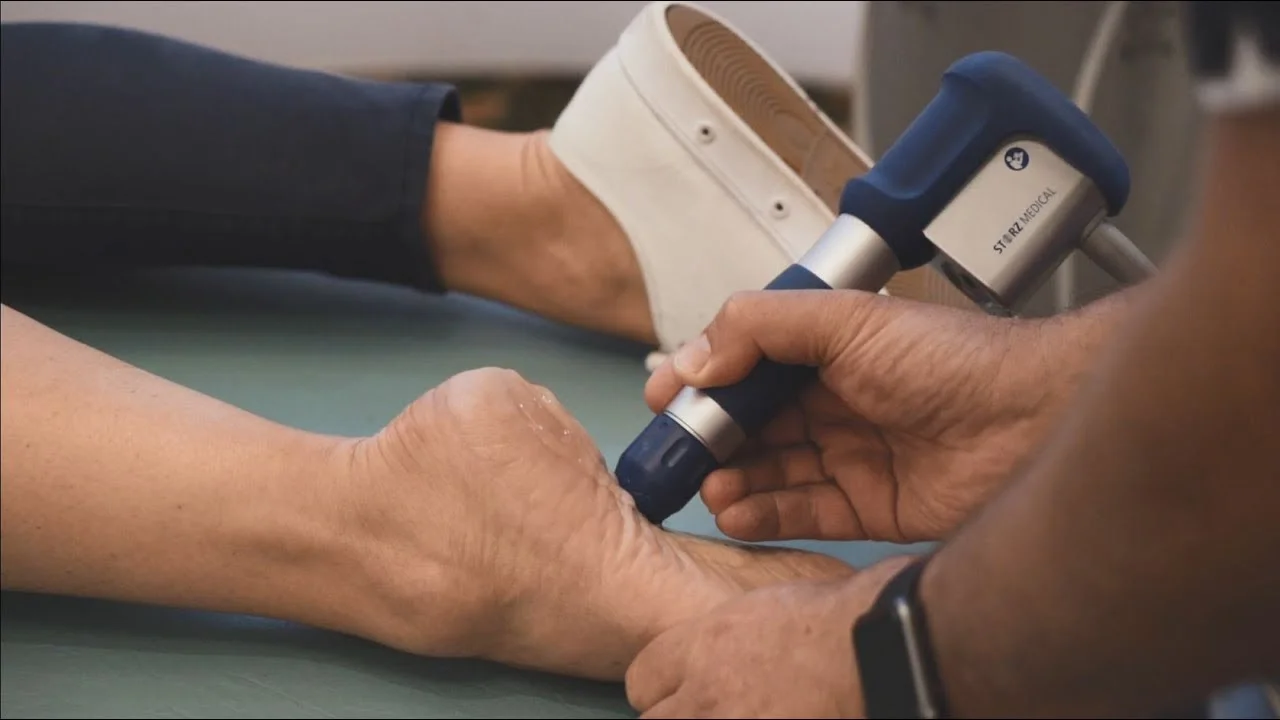
For patients whose heel pain in the morning has been present for more than three months and has not responded adequately to physiotherapy and progressive loading, Shockwave Therapy is one of the most effective additional interventions available.
Shockwave therapy uses acoustic pressure waves to stimulate blood flow, promote tissue healing, and break down the degenerative changes within the plantar fascia that prevent natural recovery. The evidence base for shockwave therapy in plantar fasciitis is among the strongest in the entire field of musculoskeletal shockwave research with research consistently showing 60 to 80 percent of patients with chronic plantar fasciitis reporting significant or complete resolution of symptoms following a course of treatment.
3.5 Custom Orthotics Where Indicated
For patients whose heel pain in the morning is being driven or maintained by significant foot mechanics issues, particularly excessive pronation or high-arched rigid feet, Custom Orthotics can be an important component of the treatment plan.
At Physio Performance custom orthotics are prescribed based on a Gaitscan computerised pressure analysis rather than a generic prescription based on foot appearance alone. Your therapist will assess whether custom orthotics are likely to make a meaningful difference for your specific presentation and will be honest with you if they are not indicated.
4. What You Can Do Right Now for Your Heel Pain in the Morning
While waiting for your physiotherapy appointment these practical steps will help manage heel pain in the morning without making the condition worse.
Plantar fascia stretch before your first step. Before getting out of bed reach down and pull your toes back toward your shin, stretching the plantar fascia gently for 30 seconds. Do this two or three times before standing. This pre-stretches the fascia from the shortened overnight position before the full weight of your body loads it and significantly reduces the severity of those first steps for most patients.
Footwear from the first step. Walking barefoot on hard floors first thing in the morning is one of the most consistent aggravators of heel pain in the morning. Supportive footwear with cushioning should be on your feet before you take your first step. A pair of supportive slippers beside the bed is a practical solution.
Ice after prolonged activity. Applying an ice pack wrapped in a damp cloth to the bottom of the heel for 15 minutes after activity that has provoked the pain helps manage local tissue irritation.
Avoid the temptation to rest completely. As discussed, complete rest does not fix heel pain in the morning. Maintain your normal activity with footwear that supports and cushions the heel and begin the progressive loading work your physiotherapist prescribes.
For more practical information while you wait for your appointment download our Free Stop Knee and Hip Pain Guide or book directly online with no GP referral needed.
5. How Long Does Heel Pain in the Morning Take to Resolve
Recovery timelines for heel pain in the morning depend significantly on how long the condition has been present and how consistently the treatment plan is followed.
Acute presentations present for less than six weeks typically respond well within four to eight weeks of proper treatment with progressive loading and addressing contributing factors.
Sub-acute presentations present for six weeks to three months typically require eight to twelve weeks of consistent treatment for significant improvement and full recovery.
Chronic presentations present for more than three months, particularly cases with degenerative changes within the fascia, may require three to six months of progressive treatment, often including shockwave therapy for the best outcomes.
The single most important factor in recovery speed is consistency with the progressive loading programme. Patients who do their exercises regularly recover faster and more completely than those who do the exercises only when the pain is bad. The exercises are most valuable when the pain is settled because that is when the tissue is most receptive to the load that drives remodelling.
According to research published in the Journal of Orthopaedic and Sports Physical Therapy on plantar fasciitis management, progressive loading programmes produce significantly better long-term outcomes than stretching and rest alone, particularly for presentations lasting more than six weeks, supporting active rehabilitation as the primary treatment approach for heel pain in the morning.
6. Frequently Asked Questions
This is the classic pattern of plantar fasciitis. During sleep the plantar fascia rests in a shortened position and begins a low-level healing response. The first steps of the morning load this shortened tissue rapidly under full body weight, disrupting the overnight repair and causing sharp pain. After five to ten minutes of walking the tissue warms up and becomes more pliable and the pain settles. This same pattern repeats whenever you have been off your feet for an extended period.
Yes in most cases with appropriate modifications. Low impact activities including swimming and cycling are typically well tolerated. Running and prolonged standing on hard surfaces are the activities most likely to aggravate heel pain in the morning and may need to be modified rather than eliminated during treatment. Your therapist will give you specific activity guidance based on your individual presentation and recovery stage.
Plantar fasciitis is the most common cause of heel pain in the morning but it is not the only one. Fat pad syndrome, insertional Achilles tendinopathy, heel bursitis, and calcaneal stress fractures can all produce morning heel pain with varying patterns. A proper clinical assessment distinguishes between these conditions and ensures the treatment is appropriate for the specific diagnosis.
Not necessarily. Custom orthotics are a useful component of treatment for patients whose heel pain in the morning is being driven by specific foot mechanics issues including significant overpronation or high-arched rigid feet. For many patients appropriate footwear, progressive loading, and physiotherapy are sufficient without orthotics. Your therapist will assess whether orthotics are likely to make a meaningful difference for your specific presentation.
Some mild acute presentations do settle without formal treatment, particularly in younger patients who modify their activity and footwear. However heel pain in the morning that has been present for more than six to eight weeks without significant improvement is unlikely to resolve spontaneously. The longer the condition has been present the more established the degenerative changes in the fascia become and the more specific treatment is required to reverse them.