Quick answer: When you choose heat or ice for back pain, the NHS says to use heat for stiffness and muscle spasms, and ice for pain and swelling. Wrap any pack in a cloth, keep moving gently and see a GP if the pain does not improve within a few weeks, as the HSE advises. Physio Performance in Drogheda can assess your back and plan your recovery.
When your back hurts, it is natural to reach for whatever is in the cupboard. A hot water bottle, a bag of frozen peas, a pack from the pharmacy. Then comes the question: heat or ice for back pain, and does it matter?
Both the HSE in Ireland and the NHS in the UK mention both. Their advice is short and practical, and this guide explains it in plain English. The HSE page was last reviewed on 14 July 2026 and the NHS page on 5 March 2026.
We are a physiotherapy clinic in Drogheda, so we hear this question every week. The honest answer is that packs ease symptoms, but they do not fix the cause.
Key takeaways
- The NHS says to use an ice pack for pain and swelling, and a heat pack or hot water bottle for stiffness and muscle spasms.
- Wrap every pack in a cloth or tea towel. Do not put it straight onto your skin.
- Back pain usually improves on its own within a few weeks, so stay active as far as you can.
- Too much rest can make the pain worse, according to the HSE.
- See a GP if the pain does not improve in a few weeks, and straight away if you have warning signs such as numbness around your bottom.
Online booking, or call 041 987 7059.
Should you use heat or ice for back pain?
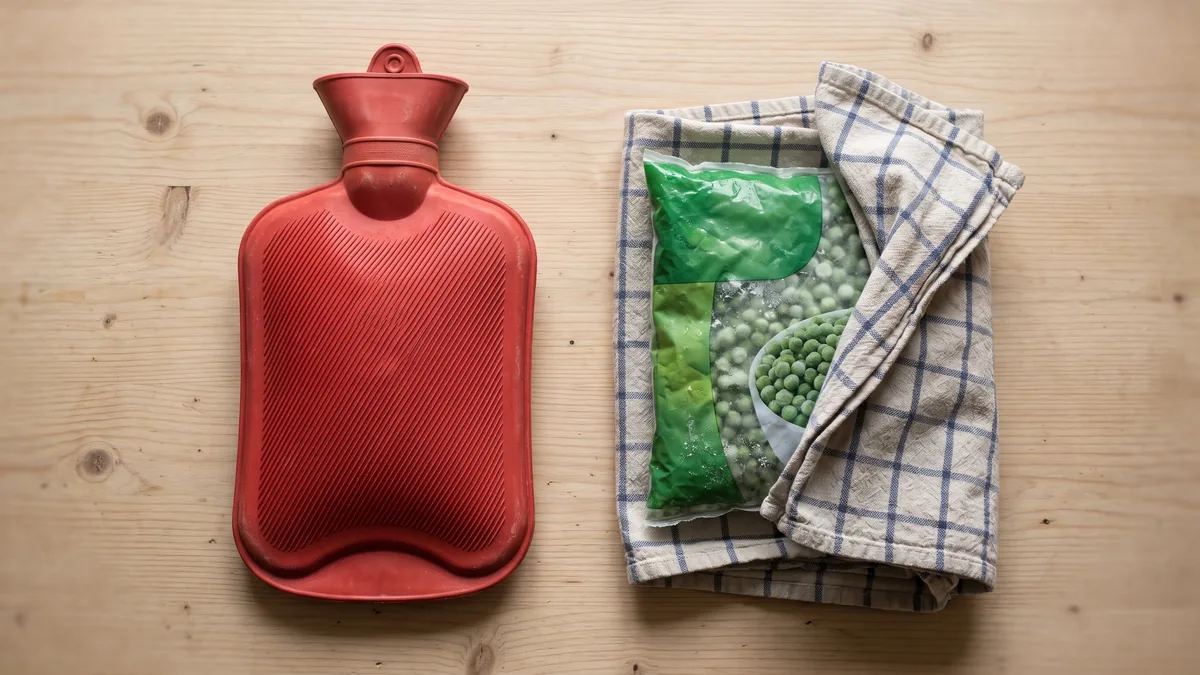
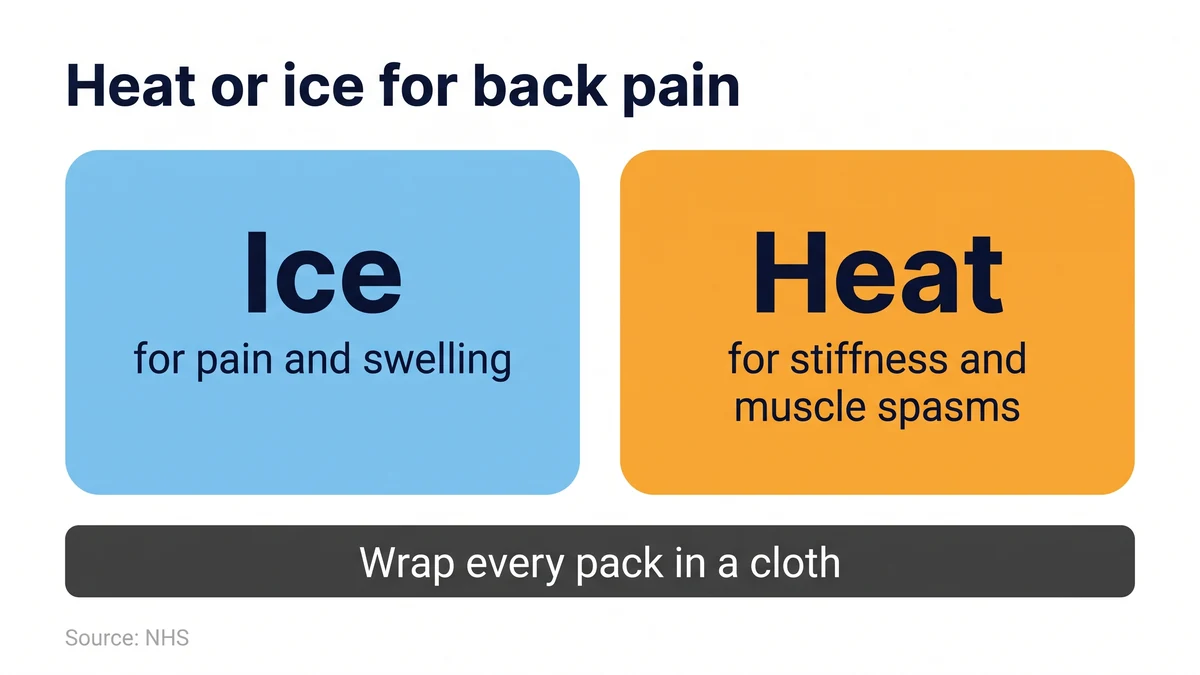
You can use either, and the choice depends on how your back feels. The NHS gives a simple rule. Use an ice pack, or a bag of frozen peas, wrapped in a tea towel to reduce pain and swelling. Use a heat pack, or a hot water bottle, wrapped in a tea towel to relieve joint stiffness or muscle spasms.
The HSE says much the same. It suggests hot or cold compression packs from a pharmacy, and says a hot water bottle or frozen vegetables in a cloth can work too.
| What you feel | What the NHS suggests |
|---|---|
| Sharp pain or swelling | Ice pack wrapped in a tea towel |
| Stiff joints | Heat pack wrapped in a tea towel |
| Tight muscles or spasms | Heat pack or hot water bottle wrapped in a tea towel |
Source: NHS, Back pain (last reviewed 5 March 2026).
If you cannot tell which you have, try one and see how your back responds. If a pack makes the pain worse, stop and ask a pharmacist or physio.
How do you use a heat pack for back pain?
A heat pack for back pain can be a pharmacy pack, a wheat bag or a hot water bottle. The NHS says to wrap it in a tea towel. That protects your skin and spreads the warmth more gently.
Lie or sit in a position where your back is supported, and place the wrapped pack over the sore area. Follow the instructions that come with the pack for how long to use it and how to heat it. If your skin turns red or feels sore, take it off.
Heat tends to suit the stiff, tight kind of ache you notice in the morning or after sitting. It can make it easier to move, and moving is what helps most.

How do you use an ice pack on your back?
For an ice pack you can use a pack from the freezer, or a bag of frozen peas. The NHS says to wrap it in a tea towel. The HSE says frozen vegetables in a cloth can work.
Keep the pack on the sore area for the time shown on its instructions and check your skin as you go. Ice is mostly for pain and swelling, such as a sore spot that flared after a fall or a heavy lift.
If you feel numbness, pins and needles, or the skin changes colour, stop using the pack.
Do heat and ice fix back pain?
No. They ease how the pain feels, but they do not treat the cause. The HSE says back pain usually gets better on its own within a few weeks or months, and the NHS says it often improves within a few weeks.
What matters more is what you do between packs. Both sources agree on the key points.
- Stay as active as possible. The HSE suggests walking, swimming, yoga and pilates may help.
- Continue everyday activities. The HSE says too much rest can make the pain worse, and the NHS says not to stay in bed for long periods.
- Try exercises and stretches for back pain.
- Ask a pharmacist about painkillers such as ibuprofen, which may not suit everyone.
Sources: HSE, Back pain (last reviewed 14 July 2026), and NHS, Back pain (last reviewed 5 March 2026).
If you sit most of the day, our guide to mobility exercises for desk workers has gentle moves to try.
Or book online at Physio Performance in Drogheda.

What is the best way to ease back pain in the first few days?
A simple routine works for most people with ordinary back pain, based on the HSE and NHS advice.
- Keep moving gently. Short walks are better than staying in a chair or in bed.
- Use a wrapped heat pack when you feel stiff or tight, or a wrapped ice pack when it feels sore or swollen.
- Ask a pharmacist about painkillers if you need them.
- Try gentle stretches that do not bring on sharp pain.
- Keep up your normal day as far as you can.
If you are not sure which side of the back is the problem, our post on pain in the lower right side of the back explains common causes and when to get help.
When should you see a GP straight away?
Some symptoms need urgent attention. The HSE says to contact a GP straight away if you have back pain and any of these:
- numbness or tingling around your genitals or bottom
- pain that gets worse at night or stops you sleeping
- problems peeing or controlling your peeing or pooing
- chest pain
- shivers, hot skin or a temperature of 38 degrees or more
- unexplained weight loss
- a swelling or deformity in your back
- pain that rest does not reduce, or that follows a serious accident
- pain that gets worse when you sneeze, cough or poo
- pain at the top of your back or between your shoulders
These can be a sign of something that needs urgent care, so do not wait and rely on a pack.
When should you see a physio for back pain?
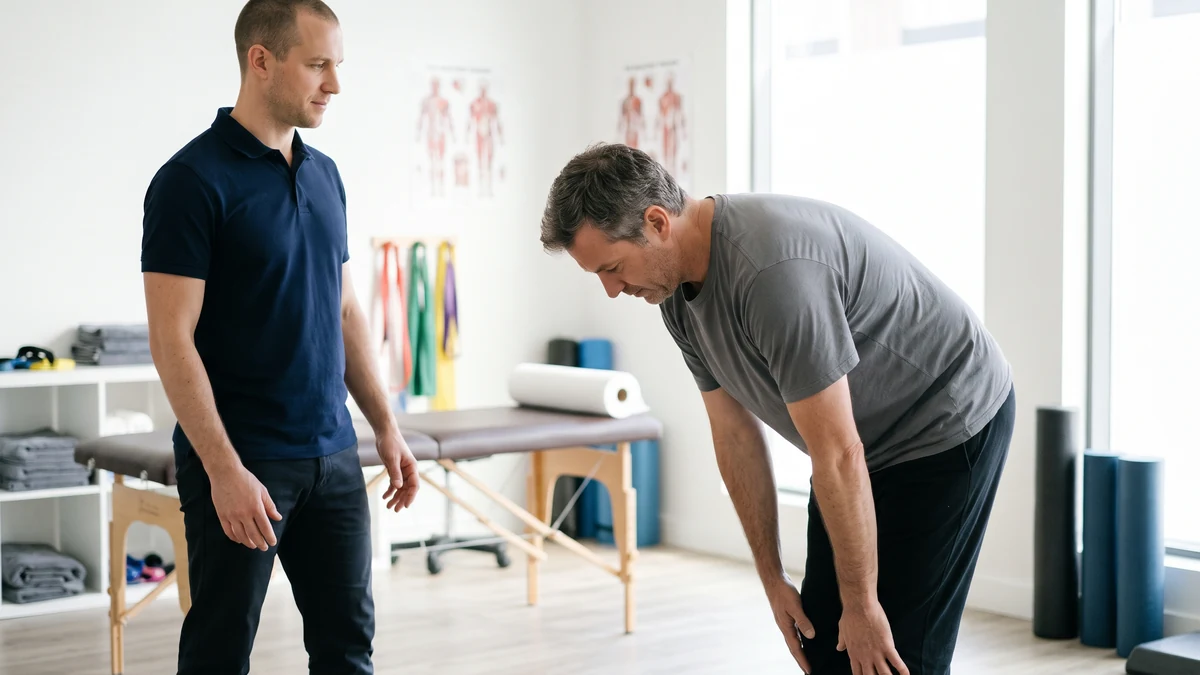
The HSE says you could contact a physiotherapist directly for exercises and stretches, and says to see a GP if the pain does not start to improve within a few weeks, stops you doing everyday activities, is very severe or gets worse over time, or causes you worry.
A physio can find out what is driving your pain and show you what to do next. At Physio Performance you can book online, or call for a free phone consultation first. If your pain runs down the leg, read our guide to sciatica pain treatment in Drogheda. For standing or sitting pain, see lower back pain when standing too long. You can also see our back pain treatment in Drogheda page.
Frequently asked questions
Is heat or ice better for back pain?
Neither is better for everyone. The NHS says to use ice for pain and swelling, and heat for joint stiffness or muscle spasms, always wrapped in a tea towel. The HSE says hot or cold compression packs, a hot water bottle or frozen vegetables in a cloth can all work. Choose whichever feels better.
Can I use a heat pack on a sore back every day?
The NHS and HSE do not set a limit, but they say back pain usually improves within a few weeks, so heat is a short term help. Follow the instructions on your pack and keep your skin protected. If you still need it after a few weeks, speak to a GP or physio.
Should I stay in bed with back pain?
No. The HSE says too much rest can make back pain worse, and the NHS says not to stay in bed for long periods. Stay as active as you can with gentle walking and everyday tasks. Use a heat or ice pack to make moving easier.
Is a hot water bottle good for back pain?
It can help with stiffness or muscle spasms. The NHS says a heat pack or hot water bottle wrapped in a tea towel can relieve them. Use a wrapped bottle rather than putting it straight on your skin, and take care with very hot water.
When should I see a physio for back pain?
The HSE says you can contact a physiotherapist directly for exercises and stretches. Book if the pain does not improve in a few weeks, stops you doing everyday activities or keeps coming back. If you have warning signs such as numbness around your bottom, call a GP straight away.
Conclusion
When you ask whether to use heat or ice for back pain, the answer from the NHS and HSE is simple: ice for pain and swelling, heat for stiffness and spasms, always wrapped, and gentle movement as well. Packs ease symptoms, but they do not replace advice if the pain lingers, so stay active and ask for help early. Physio Performance in Drogheda can assess your back and plan the next step with you. Book online or call 041 987 7059 for a free phone consultation.
Physio Performance, Donore Business Park, Drogheda.