Physio Performance, Health & Fitness
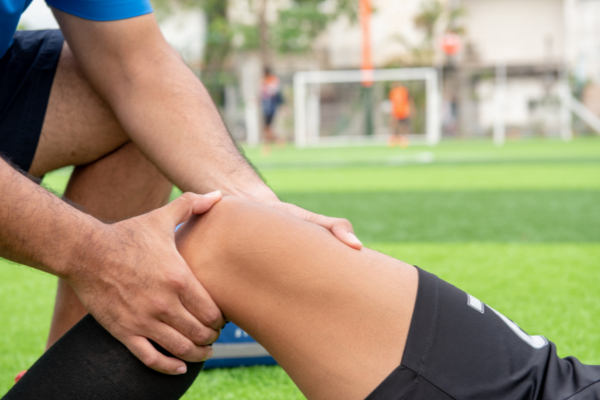
Knee Pain Treatment Drogheda at Physio Performance is something we deal with every single week — and if your knee has been giving you grief for a while now, you already know how much it takes over your life. The stairs. Getting up from a chair. A walk that used to take no thought at all. Suddenly everything involves a calculation.
Here is the thing most people with knee pain never get told: the knee is rarely the problem. It is usually the victim. The way your hip moves, how your foot strikes the ground, the strength of the muscles above and below the joint — all of these things put load through your knee every single day. When something is off in that chain, the knee is where you feel it.
That is why knee pain that is treated at the knee alone — with ice, rest, and painkillers — keeps coming back. The source of the problem is somewhere else entirely. This guide will explain what is actually causing your knee pain, what proper treatment looks like in 2026, and what it takes to get back to doing the things you love without thinking twice about it.
1. Why Knee Pain Is So Common — And So Commonly Mismanaged
The knee is the largest joint in the body and one of the most loaded. Every step you take puts force equivalent to roughly 1.5 times your body weight through the knee. Running increases that to 3 to 4 times. Jumping and landing can push it to 8 times or more. The knee handles an enormous amount every single day — and when something in the system is not working properly, it tells you.
The reason knee pain is so commonly mismanaged is that most people — and unfortunately many healthcare providers — focus entirely on where the pain is rather than why it is there. A sore knee gets ice and rest. The pain settles. The underlying cause — tight hip flexors, weak glutes, poor foot mechanics, a movement pattern that loads the joint unevenly — remains completely unaddressed. And within days or weeks, the knee is sore again.
This cycle of temporary relief followed by the same pain coming back is not bad luck. It is what happens when the root cause is never found.
2. What Is Actually Causing Your Knee Pain?
Knee pain is not one condition. It is a symptom that can come from a wide range of different causes — each of which requires a different treatment approach. Getting the right diagnosis at the start is everything.
The most common causes of knee pain we treat at Physio Performance:
Patellofemoral pain syndrome (runner’s knee): Pain around or behind the kneecap — typically worse with stairs, squatting, prolonged sitting, and running. Usually driven by weakness in the hip and glute muscles combined with poor patellar tracking mechanics. Extremely common in runners, cyclists, and GAA players. Very responsive to the right physiotherapy programme.
Patellar tendinopathy (jumper’s knee): Pain at the front of the knee, just below the kneecap, at the patellar tendon. Common in athletes who do a lot of jumping and sprinting — particularly GAA players, basketball players, and volleyball players. Requires a specific progressive loading programme — not rest, which makes tendinopathy worse over time.
Meniscus injury: The meniscus is the cartilage cushion inside the knee. Tears can happen suddenly through a twisting injury or gradually through wear and tear. Symptoms include pain on the inner or outer knee line, swelling, clicking, and sometimes locking. Many meniscus tears respond excellently to physiotherapy without surgery — proper assessment determines which ones do and which ones need a surgical referral.
Iliotibial band syndrome (IT band syndrome): A sharp pain on the outer side of the knee — very common in runners and cyclists. Caused by tightness and friction of the IT band over the lateral femoral condyle. Driven almost always by hip weakness and training load errors rather than the IT band itself.
Medial collateral ligament sprain: Pain and instability on the inner side of the knee, typically following a direct blow or awkward landing. Grades 1 and 2 respond well to physiotherapy. Grade 3 tears may require surgical review.
Osteoarthritis: Gradual wear and tear of the cartilage within the knee joint — resulting in pain, stiffness, and swelling, particularly in the morning and after prolonged activity. Osteoarthritis is far more manageable than most people are told. Strength training and physiotherapy consistently produce significant pain reduction and function improvement — in many cases better than medication or surgery.
Knee bursitis: Inflammation of one of the fluid-filled sacs around the knee joint — causing localised swelling and tenderness. Common in people who kneel frequently for work or in athletes with repeated compressive loading.
Each of these has a different cause, a different presentation, and a different treatment pathway. None of them are fixed by generic exercises from a leaflet.
3. Knee Pain Treatment Drogheda: The Proven Approach at Physio Performance
3.1 A Thorough Assessment Before Anything Else
Every patient who comes to Physio Performance with knee pain goes through a comprehensive one-to-one assessment before any treatment begins. This is not optional — it is the foundation of everything that follows.
The assessment examines the knee itself, but also the hip, the foot and ankle, and the movement patterns that load the knee during daily activities and sport. Because the knee is almost always a victim of what is happening above or below it — and treating the knee in isolation while ignoring those factors is why so many people spend months going in circles.
The assessment gives us a clear answer to three questions: what is the diagnosis, what is driving it, and what does this specific person need to fix it properly.
3.2 Physiotherapy — The Foundation of Every Knee Pain Treatment Plan
For the vast majority of knee conditions, physiotherapy is the most effective treatment available. Not passive — not just hands-on treatment while you lie there — but active, progressive rehabilitation that addresses the root cause and builds genuine resilience. According to the Irish Society of Chartered Physiotherapists, chartered physiotherapists are the most qualified professionals for the assessment, diagnosis, and treatment of musculoskeletal conditions including knee pain — and direct access without a GP referral is available throughout Ireland.
What physiotherapy for knee pain at Physio Performance involves:
Manual therapy: Hands-on treatment targeting the knee joint, the muscles around it, and the hip and foot mechanics that are loading it. Joint mobilisation, soft tissue release, and taping techniques are used where appropriate.
Specific exercise prescription: A personalised programme built around the specific diagnosis, the individual’s body, and their goals — not a generic knee exercise sheet. Every patient receives their programme through the Physitrack app, so the exercises, progressions, and targets are always clear and accessible between sessions.
Movement retraining: Identifying and correcting the movement patterns — the way you squat, run, land, or climb stairs — that are putting excessive load through the knee. This is one of the most important and most commonly overlooked components of knee pain treatment.
Progressive loading: Systematically building the capacity of the knee and the structures around it to handle the demands of your daily life and sport. This is particularly important for tendinopathies, where the tendon needs to be loaded progressively to drive the tissue remodelling that leads to full recovery.
3.3 Shockwave Therapy for Knee Pain
For knee conditions involving tendinopathy — particularly patellar tendinopathy — Shockwave Therapy is one of the most effective treatments available and is supported by a strong body of research evidence.
Shockwave therapy uses acoustic pressure waves to stimulate blood flow, promote tissue healing, and reduce pain in tendons and other soft tissues that have a limited natural blood supply. At Physio Performance it is used as part of a comprehensive treatment plan — combined with progressive loading and physiotherapy — not as a standalone intervention.
For patients who have had patellar tendinopathy for months or years and have not responded to previous treatment, shockwave therapy combined with a properly structured rehabilitation programme frequently produces results where nothing else has.
3.4 TECAR Therapy for Knee Conditions
TECAR Therapy uses radiofrequency energy to generate deep therapeutic warmth within the tissues — reducing inflammation, improving circulation, and accelerating tissue healing at a cellular level.
For acute knee injuries with significant inflammation — fresh ligament sprains, meniscus irritation, or post-surgical knee swelling — TECAR therapy can significantly reduce pain and swelling in the early stages of rehabilitation, creating a much better environment for the physiotherapy and exercise work that follows.
3.5 Custom Orthotics for Knee Pain
For knee pain that is being driven by foot and ankle mechanics — overpronation, supination, or abnormal gait patterns — Custom Orthotics can be an important part of the treatment plan.
At Physio Performance we use a Gaitscan assessment — a pressure-sensitive plate that captures the full dynamics of how your foot loads during walking and running — to determine whether custom orthotics are likely to help and exactly what correction is needed. Not everyone with knee pain needs orthotics. But for those whose knee pain is being driven by foot mechanics, the right orthotic can make a significant and lasting difference.
3.6 VALD ForceDecks Testing for Knee Strength Assessment
For athletes returning to sport after knee injury or surgery, objective strength testing is essential — and at Physio Performance we use VALD ForceDecks technology to provide exactly that.
ForceDecks are force plates that measure the power, symmetry, and movement quality of both legs simultaneously — giving us objective data on whether the injured knee is genuinely performing at the level required for safe return to sport. This removes the guesswork from one of the most important decisions in knee rehabilitation and gives both the patient and the therapist clear, evidence-based confidence in the return to sport decision.
4. Knee Pain in GAA Players — A Specific Challenge
For GAA players in Drogheda and across Co. Louth, knee pain is one of the most common reasons for missing training and matches. The demands of Gaelic football and hurling — explosive sprinting, repeated jumping and landing, cutting and pivoting — place enormous and repeated load through the knee joint.
The most common knee conditions we see in GAA players at Physio Performance are patellar tendinopathy, patellofemoral pain syndrome, ACL injuries, and meniscus tears. Each of these requires a different treatment approach — and all of them benefit enormously from early, proper assessment rather than waiting to see if they settle on their own.
The knee that gets a proper assessment early, a clear diagnosis, and a specific treatment plan recovers faster and more completely than the knee that is rested until the pain eases and then loaded straight back into training. Every time.
For our specialist approach to knee injuries in athletes including ACL reconstruction rehabilitation and return to sport testing, see our detailed guide on ACL Recovery Physiotherapy Drogheda and our HRIG Hamstring Assessment service.
5. Knee Pain and Osteoarthritis — You Do Not Have to Just Live With It
One of the things that frustrates us most at Physio Performance is the number of people who arrive having been told by someone — a GP, a well-meaning friend, the internet — that their knee arthritis is just something they have to accept and manage.
They have been told to rest more. To avoid certain activities. That things will gradually get worse. And that eventually they will need a knee replacement.
This picture is significantly more negative than the evidence supports. Research consistently shows that strengthening the muscles around an arthritic knee — systematically and progressively — produces significant reductions in pain and significant improvements in function. In many cases, the improvements are comparable to surgical outcomes. Without the risks, the recovery time, or the cost.
The key word is progressive. Not a gentle walk. Not generic stretches. A structured, supervised programme that loads the knee sufficiently to drive genuine adaptation — but carefully enough to avoid aggravating the joint in the process.
If you have been told you have knee arthritis and that there is nothing to be done short of surgery, a proper physiotherapy assessment is absolutely worth pursuing. You may be surprised at what is actually possible.
For our approach to managing knee and hip conditions including osteoarthritis, you can download our Free Stop Knee and Hip Pain Guide — practical advice you can start using right now.
6. How Long Does Knee Pain Take to Recover?
The honest answer is: it depends on what is causing it, how long it has been present, and how consistently the treatment plan is followed. As a general guide:
| Condition | Typical Recovery Timeline |
|---|---|
| Patellofemoral pain syndrome | 6 to 12 weeks with consistent physio |
| Patellar tendinopathy | 3 to 6 months of progressive loading |
| Grade 1 to 2 MCL sprain | 4 to 8 weeks |
| Meniscus irritation (conservative) | 6 to 12 weeks |
| IT band syndrome | 6 to 10 weeks |
| Knee osteoarthritis (pain reduction) | 8 to 16 weeks of progressive strengthening |
| Post ACL reconstruction | 9 to 12 months to full sport |
These are general timelines. Individual recovery depends on the severity of the condition, the individual’s overall health and fitness, and — most importantly — the consistency with which the rehabilitation programme is followed.
At Physio Performance, our average patient is discharged in 6 sessions compared to an industry average of 12. That is not because we cut corners — it is because every session has a clear purpose, every exercise has a specific reason, and the programme evolves with the patient’s progress at every visit.
7. What to Do Right Now If Your Knee Is Sore
While you are waiting for your assessment or in the early stages of treatment, there are things that consistently make knee pain worse and things that consistently help.
Things that typically make knee pain worse:
- Complete rest for extended periods — inactivity weakens the muscles that support the knee and increases pain sensitivity over time
- Repeated impact activity on a knee that is already irritated — running through pain consistently makes most knee conditions worse
- Ignoring it and hoping it will settle — most knee conditions that have been present for more than a few weeks require specific treatment to resolve
Things that typically help in the early stages:
- Gentle, pain-free movement — walking at a comfortable pace, cycling if tolerated
- Strengthening the muscles above and below the knee — particularly the glutes and quads, even through simple exercises
- Avoiding prolonged positions that aggravate the knee — especially deep sitting or kneeling for long periods
- Ice in the first 48 hours after an acute flare-up — helps manage swelling
It is important to be clear: these are general suggestions, not a substitute for a proper assessment. Knee pain has many causes and what helps one person can aggravate another. The right approach depends entirely on what is actually causing the pain.
7. What to Do Right Now If Your Knee Is Sore
At Physio Performance in Drogheda, our team of chartered physiotherapists, athletic therapists, and strength and conditioning coaches have been treating knee conditions for over 12 years. We use a comprehensive approach — thorough assessment, targeted hands-on treatment, progressive exercise rehabilitation, and advanced therapies including Shockwave Therapy, TECAR Therapy, and Custom Orthotics where appropriate.
Every patient receives a personalised exercise programme through the Physitrack app with clear progressions and targets. Our team stays in regular contact throughout your recovery — because in our experience, the patients who do best are the ones who always know exactly where they are in the process and what they are working toward next.
You can download our Free Stop Knee and Hip Pain Guide for practical advice right now, or book directly online at a time that suits you — no GP referral needed.
9. Frequently Asked Questions About Knee Pain Treatment
Patellofemoral pain syndrome — pain around or behind the kneecap — is one of the most common causes of knee pain in both athletes and the general population in Ireland. Patellar tendinopathy is particularly common in GAA players and other field sport athletes. In the older population, knee osteoarthritis is the most prevalent cause of ongoing knee pain. All three conditions respond well to properly structured physiotherapy.
For most knee conditions, complete rest is not the answer — and often makes things worse over time by weakening the supporting muscles and increasing pain sensitivity. The right approach is modified activity — continuing to move within pain-free or near-pain-free limits while avoiding the specific loads that aggravate the condition. A physiotherapy assessment will give you a clear picture of what you can and cannot do safely while your knee is being treated.
No — in most cases a thorough clinical assessment by an experienced physiotherapist provides all the information needed to make an accurate diagnosis and begin treatment. MRI scans are recommended when the clinical picture suggests a significant structural injury — such as a suspected ACL tear or complex meniscus injury — that would change the treatment pathway. A physiotherapist will advise you if imaging is needed after your initial assessment.
Yes — the vast majority of knee conditions, including many that are often treated surgically, respond very well to properly structured physiotherapy. Research consistently shows that physiotherapy produces outcomes equivalent to surgery for conditions including meniscus tears, patellofemoral pain, and knee osteoarthritis — without the risks, recovery time, or cost of surgery. Surgery is appropriate for specific structural injuries — particularly complete ACL tears in active athletes — but should not be the default first step for most knee conditions.
No — you do not need a GP referral to book at Physio Performance in Drogheda. You can book directly online at any time. Direct access means you can get a proper assessment and start treatment faster — without waiting weeks for a GP appointment first.