
Physio Performance, Health & Fitness
IT Band Syndrome of the Hip: Why Runners Miss This Common Cause of Hip Pain
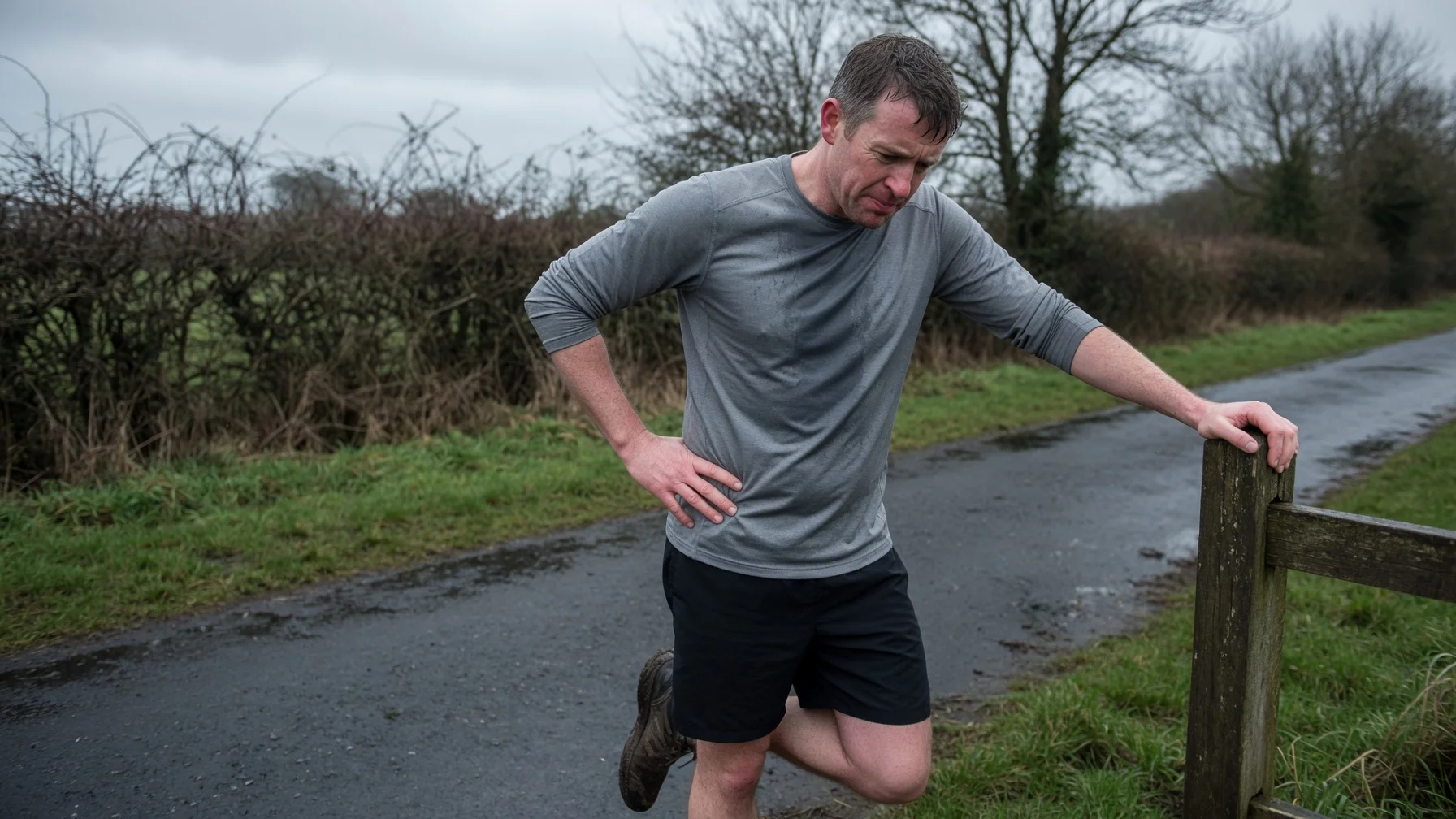
Most runners who develop iliotibial band syndrome of the hip spend weeks thinking they have something else. They know the IT band as a knee problem. When pain appears at the outer hip instead, they assume a hip flexor strain, a glute issue, or something coming from the lower back.
The band runs the full length of the thigh, and its upper attachment sits directly over the hip. Problems at that end are common in runners and routinely missed. This guide covers what iliotibial band syndrome of the hip actually feels like, why it develops, how it differs from the knee presentation, and what recovery involves.
What Iliotibial Band Syndrome of the Hip Feels Like
The presentation is fairly consistent once you know what to look for.
Pain is felt on the outer point of the hip, over the bony prominence, sometimes extending a hand’s width down the outside of the thigh. It builds during a run rather than appearing suddenly, typically emerging somewhere between fifteen and thirty minutes in. It eases with rest but returns at a similar point on the next run.
Lying on the affected side at night is uncomfortable and often wakes people. Getting out of a car, climbing stairs and standing up after long sitting all provoke it. Standing on one leg to put on trousers or socks is a very common early complaint.
Crucially, the pain is load-related rather than constant. It is provoked by activity and positions that compress the outer hip, and it settles when those loads are removed. Constant unremitting pain that is present at rest and unrelated to position is a different picture and warrants assessment for other causes.
Why It Develops in Runners
Iliotibial band syndrome of the hip is fundamentally a load management problem rather than a structural one.
The gluteus medius is the primary stabiliser of the pelvis during single leg stance. Running is a sequence of single leg stances. If the gluteus medius lacks the strength or endurance for the volume being asked of it, the pelvis drops slightly on the opposite side with each stride and the thigh drifts inward. That position increases tension in the iliotibial band and increases compression of the tissue underneath it at the hip.
Multiply that by the thousands of strides in a single run and the tissue becomes irritated.
The triggers that most commonly precipitate it are a sudden increase in weekly running volume, the introduction of hill running, a change in running surface, a return to running after a period off, and the accumulated effect of prolonged sitting during the working week reducing gluteal activation.

How It Differs From IT Band Syndrome at the Knee
Both presentations share the same underlying cause, which is why they frequently occur in the same runner either together or sequentially.
At the knee, the band compresses tissue against the lateral femoral epicondyle at approximately thirty degrees of knee flexion. Pain is sharp, well localised, and appears at a very predictable point in a run.
At the hip, the band compresses the gluteal tendons and bursa against the greater trochanter. Pain is often described as deeper and more diffuse, and it is more likely to be provoked by non-running activities such as lying on that side, sitting cross-legged or standing with weight shifted.
The treatment overlaps substantially because the driver, gluteal weakness and altered pelvic control, is the same. What differs is the compression management. At the knee, that means avoiding the flexion range that provokes it. At the hip, it means avoiding adduction positions.
Our guide on IT band syndrome exercises to avoid covers the knee presentation in detail, and much of it applies here.
The Assessment
At our clinic in Drogheda the assessment for suspected iliotibial band syndrome of the hip covers several elements.
Palpation to map the exact point of maximal tenderness, which distinguishes gluteal tendon involvement from tensor fasciae latae involvement. Single leg stance held for thirty seconds to see whether the symptoms reproduce under sustained load. Resisted hip abduction testing to assess whether the gluteal tendons are pain-provoking under contraction. Single leg squat observation to identify pelvic drop and knee collapse. Lumbar spine screening to rule out referred pain.
We combine this with objective strength testing through our VALD Forcedecks analysis, which measures left to right force asymmetry directly rather than relying on visual estimation of movement quality.
Treatment and Recovery
Immediate: reduce compression. Stop sleeping on the affected side. Use a pillow between the knees when side lying on the other side. Stop crossing your legs when seated. Stop standing with your weight hanging on one hip. These changes alone often produce noticeable improvement in night pain within a week.
Weeks one to three: isometric loading and running modification. Isometric hip abduction holds daily to begin loading the tendon without full range compression. Running volume reduced substantially or replaced temporarily with swimming or pool running.
Weeks three to eight: progressive strengthening. Side lying hip abduction with the top leg slightly extended behind the body line and toes turned slightly downward, which biases gluteus medius over tensor fasciae latae. Single leg glute bridges. Progressive lateral band work. Building toward single leg deadlifts as control improves.
Weeks eight onward: return to running. Structured progression with attention to cadence and stride width. A slightly wider stride reduces hip adduction directly and is one of the most effective mechanical adjustments available.
For persistent cases, our shockwave therapy has good evidence for chronic gluteal tendinopathy and can accelerate response to loading where progress has stalled.

Why It Recurs
Recurrence is common and almost always for the same reason. The runner completes rehabilitation, the pain resolves, and the strengthening stops. Within a few months of returning to full training volume the gluteal strength has regressed and the same loading pattern re-emerges.
Two brief hip strengthening sessions per week, each around fifteen minutes, is enough to maintain the gains. Runners who maintain this alongside sensible volume progression rarely see the problem return.
The other recurrence trigger is training error. Increasing weekly volume by more than roughly ten percent, introducing hills abruptly, or returning to full mileage immediately after a break all reproduce the original overload.
If you have lateral hip pain that keeps returning despite doing the exercises, book an assessment at our clinic in Drogheda and we will look at both the strength picture and the training load pattern rather than treating the symptom alone.
For the full rehabilitation programme, see our guide to IT band rehab. For related running injury guidance, our running injuries in Drogheda page covers the broader picture.
Current evidence on gluteal tendinopathy loading protocols is published in the British Journal of Sports Medicine, and the Chartered Society of Physiotherapy provides patient guidance on hip conditions.
Frequently Asked Questions
Yes. The iliotibial band attaches at the hip and passes over the greater trochanter. Compression of the gluteal tendons and bursa beneath it at that point produces lateral hip pain, which is a genuine and common presentation in runners.
Load-related pain at the outer hip that builds during running, is worse lying on that side at night, and is provoked by single leg stance is the typical pattern. A physiotherapy assessment distinguishes it from referred spinal pain and other hip conditions.
Direct rolling over the painful outer hip compresses irritated tendons against bone and typically aggravates symptoms. Soft tissue work on the surrounding gluteal and quadriceps musculature is more productive.
Usually not at full volume during the early phase. Continuing to load an irritated tendon at the volume that caused the problem prevents recovery. Reduced volume or temporary substitution with swimming allows the tissue to settle so loading can begin.
Early cases managed correctly typically improve substantially within six to eight weeks. Chronic cases with established gluteal tendinopathy commonly need three to six months of progressive loading.