
Physio Performance, Health & Fitness
Hip Bursitis: Symptoms, Causes and How Physiotherapy Treats It
Hip bursitis is one of the most common causes of pain on the outer hip, and it is also one of the most frequently mislabelled. Many patients arrive at our clinic in Drogheda having been told they have bursitis when the actual driver of their pain is a tendon problem, and the distinction matters for how it is treated.
This guide covers what hip bursitis actually is, what causes it, how it differs from the conditions it is commonly confused with, and what treatment genuinely works.
What a Bursa Actually Does
A bursa is a small fluid-filled sac that sits between tissues to reduce friction where they move against each other, typically where a tendon or muscle passes over bone. Around the hip, the trochanteric bursa sits over the greater trochanter, the bony prominence on the outside of the hip, cushioning the movement of the tendons and muscles that pass over it.
Bursitis technically means inflammation of that bursa. In practice, current understanding has shifted considerably. Research increasingly shows that what was traditionally labelled hip bursitis is, in the majority of cases, actually a tendon problem involving the gluteus medius and gluteus minimus tendons, now more accurately termed greater trochanteric pain syndrome. True isolated bursal inflammation without tendon involvement is less common than the traditional diagnosis suggested.
This matters because it changes the correct treatment. A pure inflammatory bursitis might respond well to rest and anti-inflammatory approaches. A tendon problem, which is what most cases actually are, requires progressive loading in the same way other tendinopathies do, and rest alone tends to produce poor long-term results.
What Hip Bursitis Feels Like
Pain on the outer point of the hip. Well localised to the bony prominence, sometimes extending a hand’s width down the outer thigh.
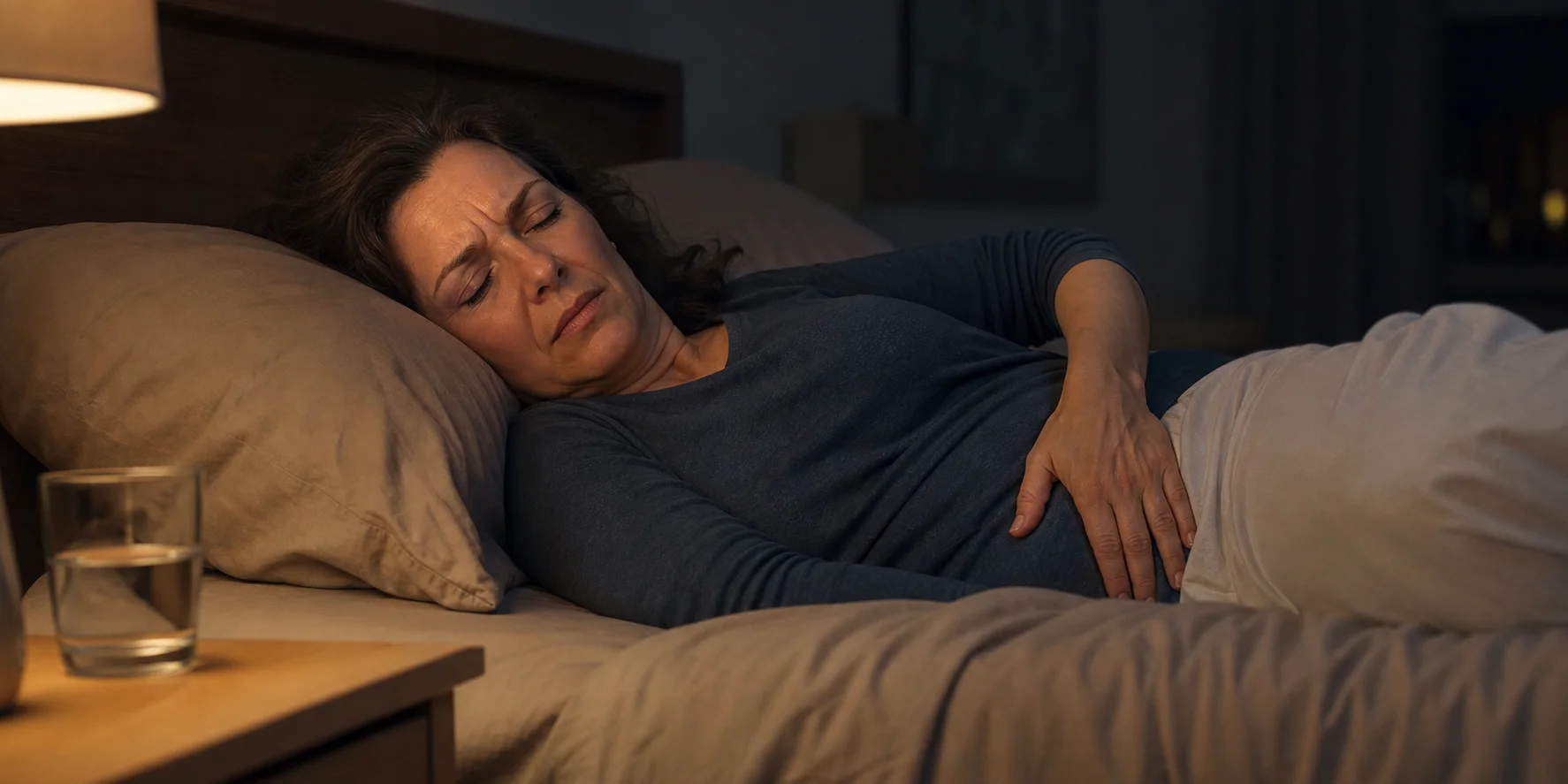
Worse lying on the affected side. Frequently the symptom that disrupts sleep most, since direct pressure on the area during side-lying is one of the most consistent aggravating factors.
Worse with sustained standing, particularly on one leg. Standing on one hip while putting on trousers or shoes is a commonly reported trigger.
Worse climbing stairs. The hip abductor muscles work hard during stair climbing, which loads the tendons passing over the trochanter.
Tenderness directly over the bony point. Pressing on the outer hip typically reproduces the familiar pain quite precisely.

Who Develops Hip Bursitis
Middle-aged and older adults, more commonly women. The condition shows a clear age and sex pattern, with the highest incidence in women over forty.
Runners and walkers who have recently increased their mileage. A sudden jump in walking or running volume overloads the gluteal tendons that pass over the trochanter.
People who sleep predominantly on one side. Consistent pressure over the trochanter during sleep is a genuine contributing factor.
People with weak hip abductor muscles. This is the underlying driver in most cases. When the gluteus medius is weak, the tensor fasciae latae and the iliotibial band compensate, increasing compression over the trochanter with every step. This is the same underlying mechanism covered in our guide on IT band hip pain, and the two conditions frequently coexist because they share a common cause.
People with a leg length difference or altered gait pattern. Anything that changes normal hip mechanics increases the load on this area.
Common Misdiagnoses
Understanding what else produces pain in the same region helps explain why an accurate diagnosis matters.
Lumbar spine referral. Nerve irritation in the lower back can refer pain into the outer hip in a pattern that closely mimics local hip pathology. A proper assessment includes screening the lumbar spine for exactly this reason.
Lateral hip tendinopathy without significant bursal involvement. As covered above, this is now understood to be the more common underlying problem in what has traditionally been labelled bursitis.
Hip osteoarthritis. Typically produces groin pain more than lateral hip pain, but presentations overlap and imaging sometimes clarifies the picture where clinical assessment is unclear.
IT band syndrome at the hip. Covered in our guide on IT band hip pain, and shares substantial overlap with hip bursitis both in presentation and underlying cause.
Treatment That Works
Load management first. Reducing the compressive positions that aggravate the tendons and bursa. This means avoiding sleeping on the affected side, using a pillow between the knees when side-lying on the other side, avoiding standing with weight shifted onto one hip, and avoiding sitting with legs crossed.
Progressive gluteal strengthening. Because weakness in the gluteus medius is the underlying driver in most cases, strengthening this muscle addresses the cause rather than just the symptom. This mirrors the approach covered in our guide on IT band hip pain, since the two conditions share this treatment foundation.
Avoiding aggressive stretching of the IT band. As with IT band syndrome, stretching positions that place the hip into adduction compress the already irritated tissue against the trochanter and frequently worsen symptoms rather than helping.
Isometric loading in the acute phase. Sustained gentle contractions of the hip abductors, held without movement, reduce pain and begin loading the tendon appropriately even when the area is highly irritable.
Shockwave therapy for persistent cases. For hip bursitis and greater trochanteric pain syndrome that has not responded to a properly executed loading programme, our shockwave therapy service has reasonable supporting evidence for this specific presentation.

What Does Not Help
Rest alone. Complete rest reduces symptoms temporarily but does not address the underlying weakness driving the condition, and symptoms typically return on resuming normal activity.
Aggressive foam rolling of the outer thigh. Compresses the already irritated tissue directly over the trochanter and commonly worsens symptoms during the acute phase.
Repeated corticosteroid injections without a loading programme. A single injection can provide useful pain relief that enables exercise to begin, but repeated injections without accompanying strengthening work do not address the underlying weakness and symptoms tend to recur.
Ignoring sleep position. This single factor is frequently the difference between a case that settles quickly and one that drags on for months, and it is often overlooked in favour of more clinical-sounding interventions.
Recovery Timeline
Cases identified early, where sleep position and aggravating activities are modified immediately alongside a gluteal strengthening programme, commonly show meaningful improvement within six to eight weeks.
Longer-standing cases, particularly where the condition has been present for many months, typically require three to six months of consistent strengthening work, since the underlying tendon changes take longer to resolve than the acute pain does.
If you have persistent outer hip pain that is disrupting your sleep or limiting your activity, book an assessment at our clinic in Drogheda so an accurate diagnosis can guide the right treatment approach. You can also download our free knee and hip pain report for interim guidance.
For related reading, see our guide on IT band hip pain, which shares much of the same underlying mechanism and treatment approach.
Current evidence on greater trochanteric pain syndrome is published in the British Journal of Sports Medicine.
Frequently Asked Questions
Greater trochanteric pain syndrome is now understood to be the more accurate term for most cases traditionally labelled hip bursitis, reflecting that the gluteal tendons rather than the bursa itself are usually the primary source of the problem. The treatment approach, progressive loading rather than rest, is largely the same regardless of the exact label.
The most common underlying driver is weakness in the gluteus medius muscle, which increases compression over the greater trochanter during walking and standing. Contributing factors include recent increases in walking or running volume, sleeping predominantly on the affected side, and altered gait patterns.
Complete rest is not generally recommended as it does not address the underlying weakness driving the condition and symptoms typically return on resuming activity. Modifying specific aggravating positions while beginning progressive strengthening is generally more effective.
Early cases managed with load modification and strengthening commonly improve within six to eight weeks. Longer-standing cases typically require three to six months of consistent strengthening work.
Not always. A corticosteroid injection can be useful for pain relief in a significantly irritable case, enabling a strengthening programme to begin. It is not a standalone solution and should be paired with progressive loading to address the underlying cause.