
Physio Performance, Health & Fitness
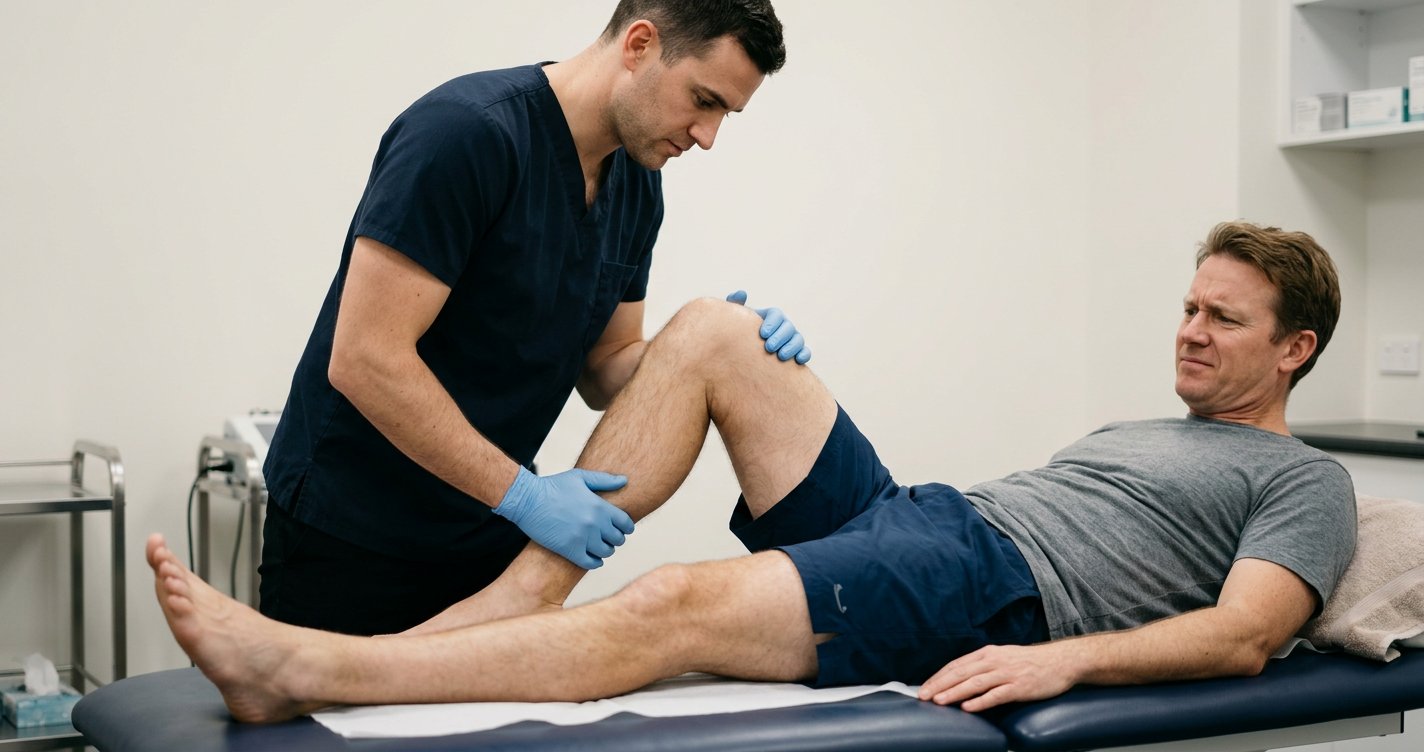
Meniscus Tear: Conservative Treatment vs Surgery
A meniscus tear diagnosis often triggers an assumption that surgery is the automatic next step, but current evidence tells a more nuanced story. For a considerable proportion of meniscus tears, particularly degenerative ones in older patients, conservative physiotherapy management produces outcomes comparable to surgery, without the recovery time and risks surgery involves.
This guide covers what the meniscus actually does, the different types of tear, and how the decision between conservative management and surgery is genuinely made.
What the Meniscus Does
The meniscus is a C-shaped piece of cartilage in the knee, with one on the inner and one on the outer side of the joint, acting as a cushion and shock absorber between the thigh bone and shin bone while also contributing to knee stability.
Tears fall into different categories with genuinely different implications. Traumatic tears, often from a twisting injury during sport, tend to occur in younger, otherwise healthy meniscus tissue. Degenerative tears, more common in older patients, occur in meniscus tissue that’s already weakened through age-related changes, sometimes with minimal or no specific injury moment at all.
Not every meniscus tear causes significant symptoms. Imaging studies of people without knee pain frequently reveal meniscus tears they were entirely unaware of, which is part of why imaging findings need to be interpreted alongside the actual clinical picture rather than in isolation.
Recognising a Meniscus Tear
Pain along the joint line, often on the inner or outer side of the knee depending on which portion of the meniscus is affected.
Swelling that typically develops over the following day, rather than immediately. This gradual swelling pattern is a fairly characteristic feature, differing from the more immediate swelling sometimes seen with ligament injuries.
Mechanical symptoms like catching, locking or a sensation of the knee giving way. These symptoms, when present, suggest a piece of torn meniscus tissue is physically interfering with normal knee movement, which is a more significant finding than pain alone.

When Conservative Treatment Is the Right Approach
Degenerative tears in older patients, particularly without significant mechanical symptoms. A substantial body of research now shows that for this specific population, structured physiotherapy produces outcomes similar to surgery for pain and function, without the recovery time surgery requires.
Tears without locking or genuine mechanical blocking of movement. Pain and some swelling can often be managed well conservatively, but a piece of meniscus physically catching and blocking the joint is a different clinical picture that may need a different approach.
A trial of structured conservative management is often reasonable even for cases that might eventually need surgery. Given the strong evidence supporting conservative treatment for many presentations, starting there and reserving surgery for cases that don’t respond adequately is frequently the sensible sequence rather than surgery as a default first step.
Conservative treatment focuses on restoring strength, particularly quadriceps strength, and normal movement patterns. Progressive loading exercises rebuild the strength and control around the knee that supports it regardless of the meniscus tear itself, often producing meaningful symptom improvement even without directly addressing the tear surgically.
When Surgery Becomes the More Appropriate Route
Genuine mechanical locking, where the knee physically cannot fully straighten or bend due to a piece of torn tissue blocking the joint, generally warrants surgical opinion, since this specific presentation doesn’t typically resolve with conservative management alone.
Younger patients with traumatic tears, particularly in a specific pattern of tear that’s known to have poor healing potential without intervention. Certain tear patterns and locations have a better prognosis with surgical repair than others, which is part of why the specific type of tear, not just its presence, factors into the decision.
Persistent significant symptoms despite a genuine trial of conservative management. If structured physiotherapy hasn’t produced meaningful improvement over an appropriate timeframe, surgical opinion becomes a reasonable next step rather than continuing indefinitely with an approach that isn’t working.
Working Through the Decision
A proper assessment, alongside imaging when appropriate, clarifies which category a specific tear falls into. This isn’t a decision to make from imaging findings alone, since the clinical picture, including symptoms, function and mechanical signs, matters as much as what an MRI shows.

A proper assessment helps determine whether conservative treatment is a genuinely reasonable first approach for your specific tear, or whether surgical opinion should be sought sooner. Book an assessment at our clinic in Drogheda if you’ve been diagnosed with, or suspect, a meniscus tear.
Frequently Asked Questions
No. For many tears, particularly degenerative ones in older patients without significant mechanical locking, structured conservative physiotherapy produces outcomes comparable to surgery.
Traumatic tears typically occur from a specific twisting injury in younger, healthier meniscus tissue, while degenerative tears occur in tissue already weakened by age-related changes, sometimes without a clear injury moment.
Genuine locking, where the knee physically cannot fully straighten or bend, suggests a piece of torn tissue is blocking normal joint movement, which generally warrants surgical opinion rather than conservative management alone.
It varies, but a structured programme typically runs several weeks to a few months, focusing on restoring quadriceps strength and normal movement, with progress reviewed regularly to determine if the approach is working.
Not reliably on its own. Imaging findings need to be interpreted alongside the actual clinical picture, since many people without knee pain have meniscus tears visible on imaging that were never causing symptoms.