
Physio Performance, Health & Fitness
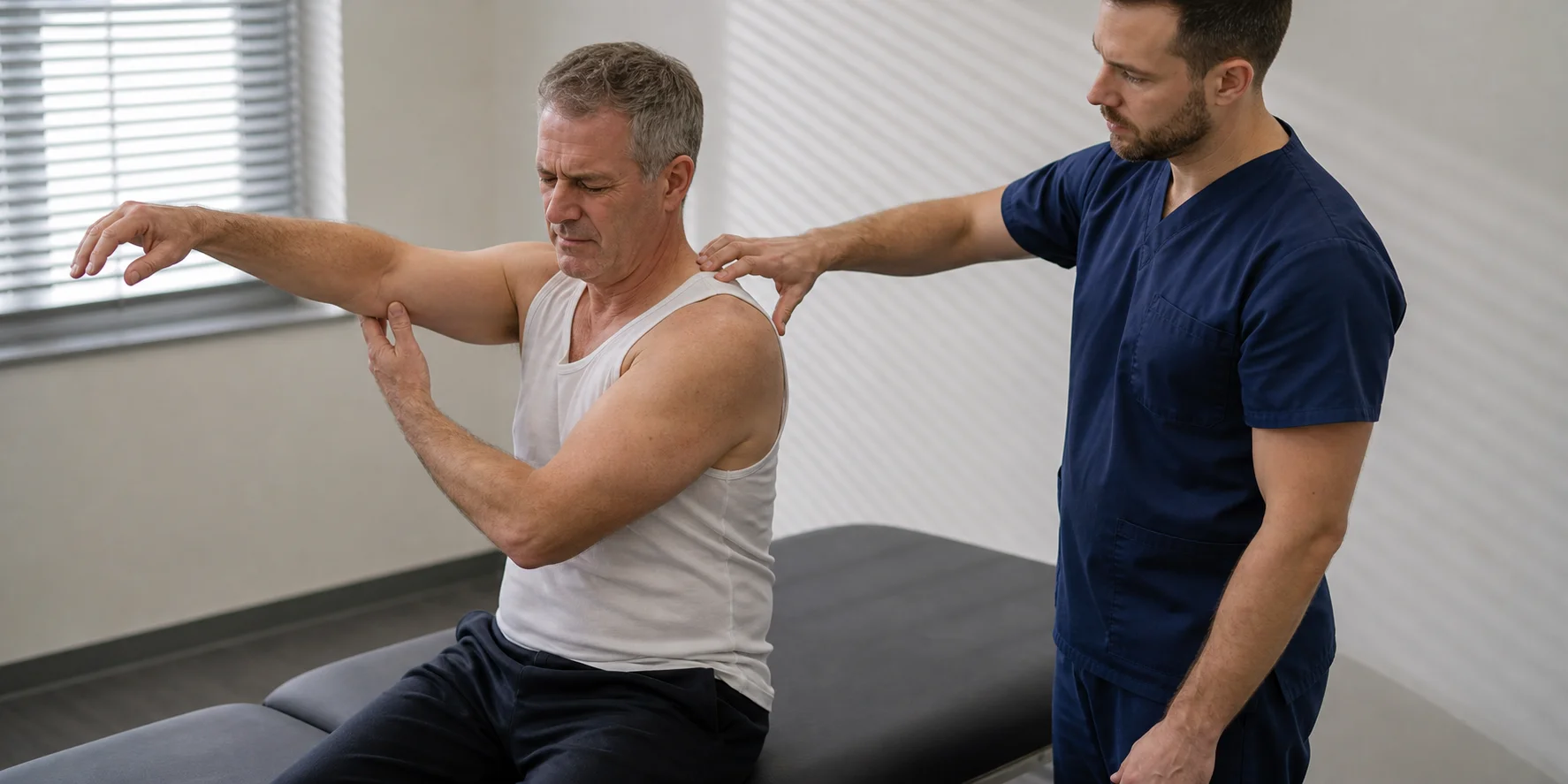
How Long Does It Take a Rotator Cuff Injury to Heal? A Physio Explains
The question of how long it takes a rotator cuff injury to heal produces such wildly different answers online because rotator cuff injury is not one condition. It covers everything from a mildly irritated tendon that settles in a few weeks to a full thickness tear that requires surgical repair and a year of rehabilitation.
Getting a useful answer starts with knowing which of those you actually have. This guide sets out the realistic healing timelines for each type of rotator cuff injury, what determines where you land within the range, and the specific factors that shorten or extend recovery.
The Four Types of Rotator Cuff Injury
The rotator cuff is a group of four muscles and their tendons surrounding the shoulder joint, controlling rotation and stabilising the ball within the socket. Injuries to it fall broadly into four categories, and they heal on very different schedules.
Rotator cuff tendinopathy. Overload irritation of the tendon without structural tearing. This is by far the most common presentation, particularly in people over forty and in anyone doing repeated overhead work or sport. Healing time is measured in weeks to a few months.
Partial thickness tear. Some of the tendon fibres have torn but the tendon remains continuous. Common with age and frequently present without symptoms. Healing time is typically three to six months with appropriate loading.
Full thickness tear. The tendon has torn all the way through. This does not spontaneously reattach, though many people function well without surgical repair because the surrounding muscles compensate. Managed conservatively the timeline for functional recovery is four to six months. Managed surgically it is six to twelve months.
Acute traumatic tear. A tear caused by a specific injury such as a fall onto an outstretched arm, often in a younger person. These are more likely to warrant surgical consideration and carry the longest timelines.
Knowing which category applies is the difference between a useful expectation and a misleading one.
Realistic Healing Timelines
Rotator cuff tendinopathy: six to twelve weeks. With load modification and a progressive strengthening programme started promptly, most tendinopathy settles substantially within this window. Cases that have been present for many months before treatment begins commonly take three to six months because the tendon has become more sensitised and the surrounding strength deficits are larger.
Partial thickness tear: three to six months. The torn portion does not typically heal by reattaching, but the shoulder can regain full pain-free function through strengthening the remaining intact tissue and the surrounding musculature. Function returns before the imaging changes, which is an important point most patients are never told.
Full thickness tear managed without surgery: four to six months. A meaningful proportion of full thickness tears, particularly degenerative ones in older adults, are managed successfully with physiotherapy alone. The goal is functional recovery rather than structural repair.
Full thickness tear managed surgically: six to twelve months. Post-operative rehabilitation follows a strict protocol. Typically a period in a sling, then passive movement only, then active movement, then progressive strengthening. Rushing any stage risks the repair failing.
Research on rotator cuff management outcomes is published regularly in the British Journal of Sports Medicine, and current evidence consistently supports structured exercise as first-line management for the majority of non-traumatic presentations.

What Determines Where You Land in the Range
How long the problem existed before treatment started. This is the single largest factor. A tendinopathy addressed at six weeks behaves very differently from the same tendinopathy addressed at twelve months. Tissue that has been irritated and unloaded for a long period is both more sensitised and weaker.
Age and tissue quality. Tendon healing capacity declines with age. This does not mean older patients cannot recover well, but it does mean the timeline stretches and the loading progression needs to be more patient.
Whether the aggravating load has actually changed. A painter who continues painting ceilings daily throughout their rehabilitation will not recover on the same timeline as one who modifies their work pattern for eight weeks.
Compliance with the loading programme. Rotator cuff rehabilitation is not passive. The patients who recover fastest are the ones doing their exercises consistently between sessions rather than relying on clinic treatment alone.
Diabetes and metabolic health. Tendon healing is measurably slower in people with diabetes. This is worth knowing rather than being discouraged by, because it simply means the timeline should be set realistically from the outset.
Sleep. Shoulder pain that disrupts sleep creates a cycle where poor sleep increases pain sensitivity, which further disrupts sleep. Addressing sleeping position early, typically by avoiding lying on the affected side and supporting the arm with a pillow, has a disproportionate effect on the overall recovery experience.
Why Function Returns Before the Scan Changes
This is one of the most useful things a patient with a rotator cuff injury can understand.
Imaging findings and symptoms correlate far less closely than most people assume. Studies of shoulder imaging in people with no shoulder pain at all consistently find substantial rates of partial and even full thickness rotator cuff tears in entirely asymptomatic shoulders, with prevalence rising sharply with age.
The practical implication is significant. A scan showing a tear does not automatically explain your pain, and successful recovery does not require the tear to close. It requires the shoulder to regain the strength and control to function without pain, which is achievable with the tissue you have.
Patients who understand this engage far better with rehabilitation than those who believe they are working around permanent damage.

What Actually Speeds Recovery
Start loading early rather than resting. Prolonged rest weakens the rotator cuff further and does not resolve tendinopathy. Appropriate loading, beginning with isometric holds and progressing to resisted rotation and elevation work, is what drives tendon adaptation.
Get the diagnosis right first. Rotator cuff pain, frozen shoulder and referred neck pain produce overlapping presentations and require entirely different management. Weeks spent on the wrong programme are weeks added to the timeline.
Address sleeping position immediately. Avoiding lying on the affected shoulder and supporting the arm on a pillow when lying on the other side reduces night pain within days for most patients.
Modify the aggravating activity temporarily. Not eliminate it, modify it. Reducing overhead work, lowering the load, or changing the technique for a defined period allows the tendon to recover while maintaining activity.
Use objective measurement to guide progression. At our clinic in Drogheda we use VALD Forcedecks testing to measure left to right strength differences, which means progression decisions are based on data rather than on how the shoulder feels on a given day.
Consider adjunct treatment for persistent cases. For tendinopathy that has not responded to loading, our shockwave therapy service has reasonable evidence in chronic tendon presentations and can help unlock progress.
When to Seek Assessment
Some presentations warrant prompt professional assessment rather than a period of self-management.
Sudden loss of strength following a specific injury, particularly an inability to hold the arm out to the side. Significant night pain that is disrupting sleep consistently. Pain that has not improved at all after three to four weeks of sensible self-management. Any weakness that is worsening rather than stable. Pins and needles or numbness extending down the arm, which suggests possible nerve involvement.
The value of assessment is primarily diagnostic accuracy. Knowing which type of rotator cuff injury you have transforms a vague timeline into a specific one, and it determines whether the correct approach is loading, referral for imaging, or onward referral for surgical opinion.
Book an assessment at our clinic in Drogheda or download our free neck and shoulder pain report for interim guidance.
For related reading, our shoulder pain treatment page covers our general approach to shoulder conditions, and our post on rotator cuff surgery recovery covers the post-operative pathway specifically.
The Chartered Society of Physiotherapy publishes patient guidance on shoulder conditions and rehabilitation expectations.
Frequently Asked Questions
It depends on the type. Tendinopathy typically settles in six to twelve weeks. Partial thickness tears take three to six months. Full thickness tears managed without surgery take four to six months, and surgically repaired tears take six to twelve months.
Tendinopathy can settle with load modification, though it resolves considerably faster with a structured strengthening programme. Full thickness tears do not reattach spontaneously, but many people regain full pain-free function without the tear closing.
Lying on the affected shoulder compresses the irritated tendons, and the lack of daytime distraction makes pain more noticeable. Avoiding sleeping on that side and supporting the arm on a pillow usually improves night pain within a few days.
Most degenerative rotator cuff tears are managed successfully without surgery. Surgical consideration is more common for acute traumatic tears, for significant loss of function that has not responded to rehabilitation, and in younger patients with high physical demands.
Progressive loading rather than rest is the evidence-supported approach for most rotator cuff presentations. Complete rest weakens the cuff further. The programme should start below the pain threshold and increase gradually.
Related reading
Struggling with this? See our shoulder pain treatment in Drogheda.