
Physio Performance, Health & Fitness
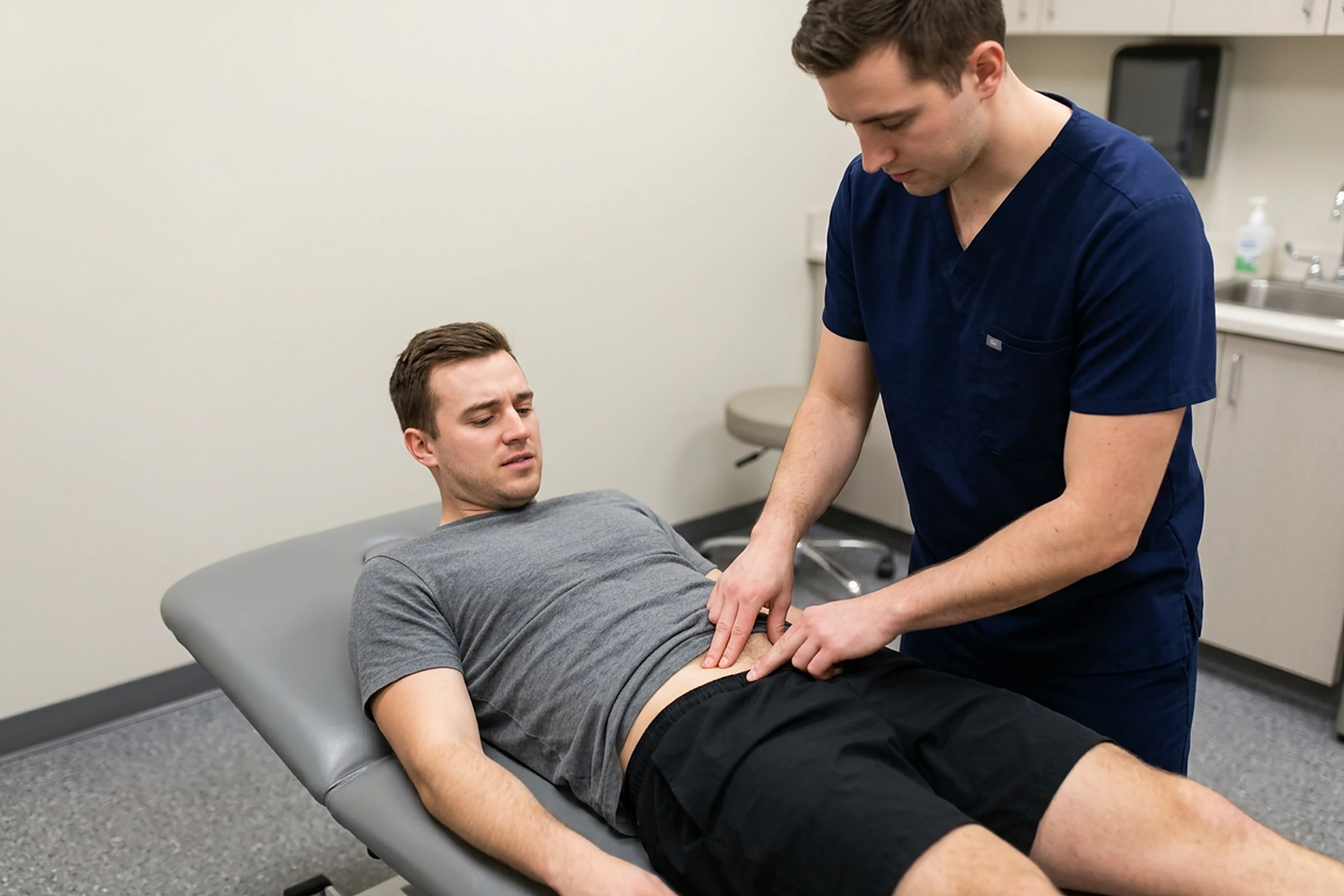
Osteitis Pubis in Athletes: Causes and Treatment
Osteitis pubis produces a particular kind of stubborn, central groin and pelvic pain that many athletes struggle to shake despite rest, and it’s frequently confused with a straightforward groin strain, which leads to treatment that doesn’t actually address what’s going on.
This guide covers what’s actually happening at the pubic symphysis, why the condition is so persistent, and what treatment genuinely helps.
What Osteitis Pubis Actually Is
The pubic symphysis is the joint at the front of the pelvis where the two halves meet, connected by cartilage and stabilised by surrounding ligaments and muscle attachments. Osteitis pubis describes an overuse-related inflammatory and degenerative process at this joint, driven by repetitive, asymmetric loading, most commonly from sports involving sprinting, kicking, and rapid changes of direction.
It’s considerably more common in sports with heavy kicking and cutting demands. GAA, soccer and rugby all feature prominently among sports where we see this condition, since the repeated, powerful, often asymmetric loading through the pelvis during kicking and sprinting places sustained stress directly on the pubic symphysis.
It often develops gradually, without one specific injury moment. Unlike an acute groin strain, osteitis pubis typically builds over weeks or months of accumulated load, which is part of why it’s frequently misdiagnosed initially as a simple strain that should settle with rest.
Why It's So Often Misdiagnosed
The pain pattern overlaps considerably with other groin conditions. Adductor strains, hip joint pathology, and osteitis pubis can all produce central or lower groin pain, and distinguishing between them requires a thorough assessment rather than assuming based on symptom location alone.
Rest alone often provides only temporary relief. Because the underlying issue involves the joint itself rather than a muscle that simply needs time to heal, symptoms frequently return once normal training resumes, which understandably frustrates athletes who did everything asked of them during a rest period.
Imaging findings don’t always correlate cleanly with symptoms. Some athletes with significant imaging changes at the pubic symphysis have minimal symptoms, while others with more modest changes are significantly limited, which is why clinical assessment matters as much as, or more than, imaging alone.

Treatment That Actually Works
Load management first, not complete rest. Reducing the specific activities driving the overload, heavy kicking, sprinting, sharp cutting, while maintaining general fitness through activities that don’t aggravate the joint, tends to produce better outcomes than stopping all activity entirely.
Addressing the whole kinetic chain, not just the painful spot. Osteitis pubis frequently develops alongside weakness or imbalance in the surrounding hip, adductor and core musculature, and a treatment plan that only addresses the pain site without correcting these contributing factors tends to see symptoms recur once training resumes.
Progressive strengthening of the adductors, abdominals and hip stabilisers. Building genuine strength and control through this whole region reduces the asymmetric stress on the pubic symphysis that drives the condition in the first place, addressing cause rather than only symptom.
A gradual, criteria-based return to sport-specific activity. Reintroducing kicking, sprinting and cutting progressively, based on how the athlete tolerates each stage rather than a fixed calendar, reduces the risk of symptoms flaring again once full training resumes.
Patience with the timeline. Osteitis pubis is genuinely one of the slower-resolving groin conditions, and setting realistic expectations upfront, rather than expecting a quick turnaround, helps athletes stay committed to the full rehabilitation process rather than returning prematurely out of frustration.
When to Seek Assessment
Persistent central groin or pelvic pain that hasn’t resolved with a few weeks of rest, pain that reproduces specifically with resisted hip adduction or single-leg loading, or a pattern of recurring groin issues despite previous treatment are all worth a proper assessment rather than continuing to self-manage.

An accurate diagnosis distinguishing osteitis pubis from other causes of groin pain is the foundation of appropriate treatment, since the two conditions respond to genuinely different approaches. Book an assessment at our clinic in Drogheda if you’re dealing with persistent groin or pelvic pain. For related reading, see our guide on groin strain treatment, which covers a related but distinct condition.
Frequently Asked Questions
A groin strain typically involves a specific muscle, usually the adductors, and often has a clear onset. Osteitis pubis involves the pubic symphysis joint itself, develops more gradually from overuse, and tends to be more persistent without addressing the underlying load and biomechanics.
It’s genuinely one of the slower-resolving conditions in this area, often taking several months of structured rehabilitation, which is why setting realistic expectations early helps athletes stay committed to the full process.
Complete rest alone often provides only temporary relief, since symptoms tend to return once training resumes. Load management alongside progressive strengthening of the surrounding musculature is generally more effective than rest in isolation.
Sports involving heavy kicking, sprinting and rapid changes of direction, particularly GAA, soccer and rugby, are most commonly associated with this condition due to the repeated asymmetric loading through the pelvis.
Not always. Imaging findings don’t always correlate cleanly with symptom severity, so a thorough clinical assessment is often more useful than imaging alone in guiding treatment.